
Fall practice brings fast cuts, uneven grass, and tired legs. One awkward landing can leave an athlete with a turned ankle. Most ankle sprains recover without surgery, but a fracture, tendon injury, or high ankle sprain can look similar at first.
Protect the ankle, check warning signs, and progress by function rather than an arbitrary date. Choice Podiatry Center provides sports medicine care for Marietta athletes who need a diagnosis and route back to play.
Key takeaways
- A sprain injures ligaments; grade 1 stretches fibers, grade 2 partially tears them, and grade 3 is a complete tear.
- Severe swelling does not prove a fracture, and mild swelling does not rule one out.
- Early protection followed by progressive weight bearing and exercise is usually better than prolonged complete rest.
- Bone tenderness, inability to take four steps, deformity, numbness, or worsening pain requires prompt evaluation.
- Return to sport should depend on pain, motion, strength, balance, confidence, and sport-specific movement.
Turned ankle: what actually gets injured?
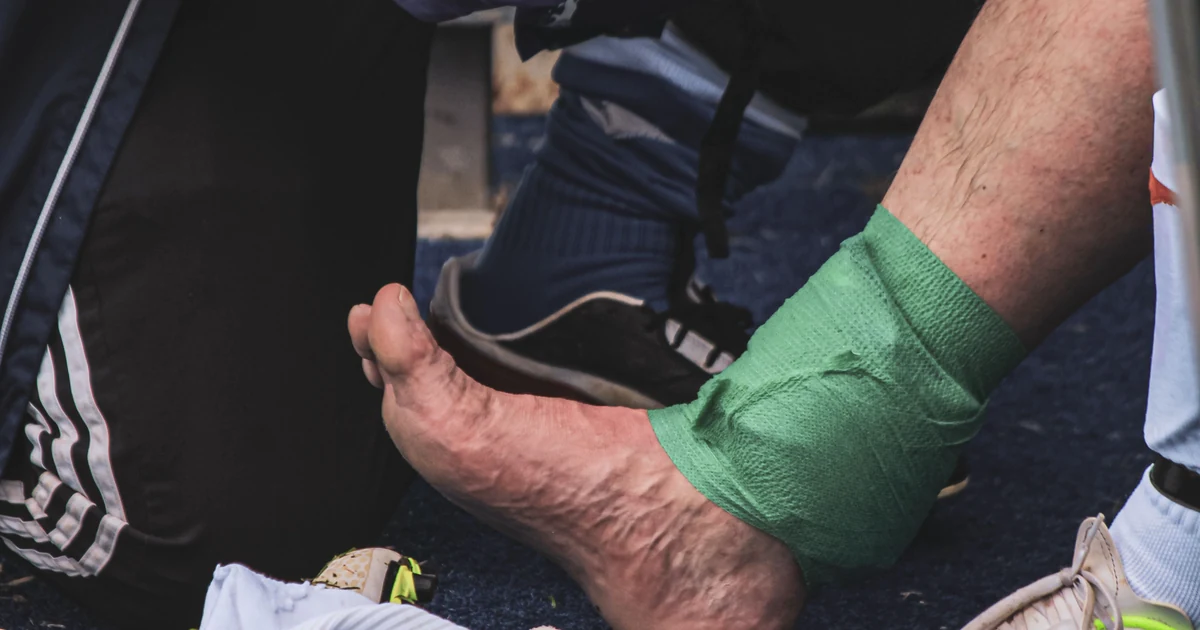
A typical ankle sprain happens when the foot rolls inward and stretches or tears ligaments on the outside of the ankle. Ligaments connect bone to bone and help control the joint. Pain, swelling, bruising, and difficulty walking can follow within minutes or build over several hours.
Not every ankle twisted during sports is a routine lateral sprain. Pain above the joint can indicate a “high ankle” injury. Pain at the base of the fifth metatarsal, over the navicular, or directly along the ankle bones raises concern for fracture.
Ankle twisted: grade 1, 2, or 3?
The grade describes ligament damage, but an athlete cannot reliably grade an ankle from a photo or the amount of bruising alone. The American Academy of Orthopaedic Surgeons uses these definitions (AAOS OrthoInfo):
| Grade | Ligament injury | Common functional picture |
|---|---|---|
| Grade 1 | Mild stretching and small fiber damage | Local tenderness, mild swelling, and walking that is possible but uncomfortable |
| Grade 2 | Partial ligament tear | More swelling or bruising, painful walking, reduced motion, and some joint looseness |
| Grade 3 | Complete ligament tear | Marked instability, significant loss of function, and often difficulty bearing weight |
Pain tolerance varies, so walking does not prove the injury is mild. Examination and imaging when indicated are more useful than guessing the grade at home.
Rolled ankle what to do in the first 24 to 48 hours
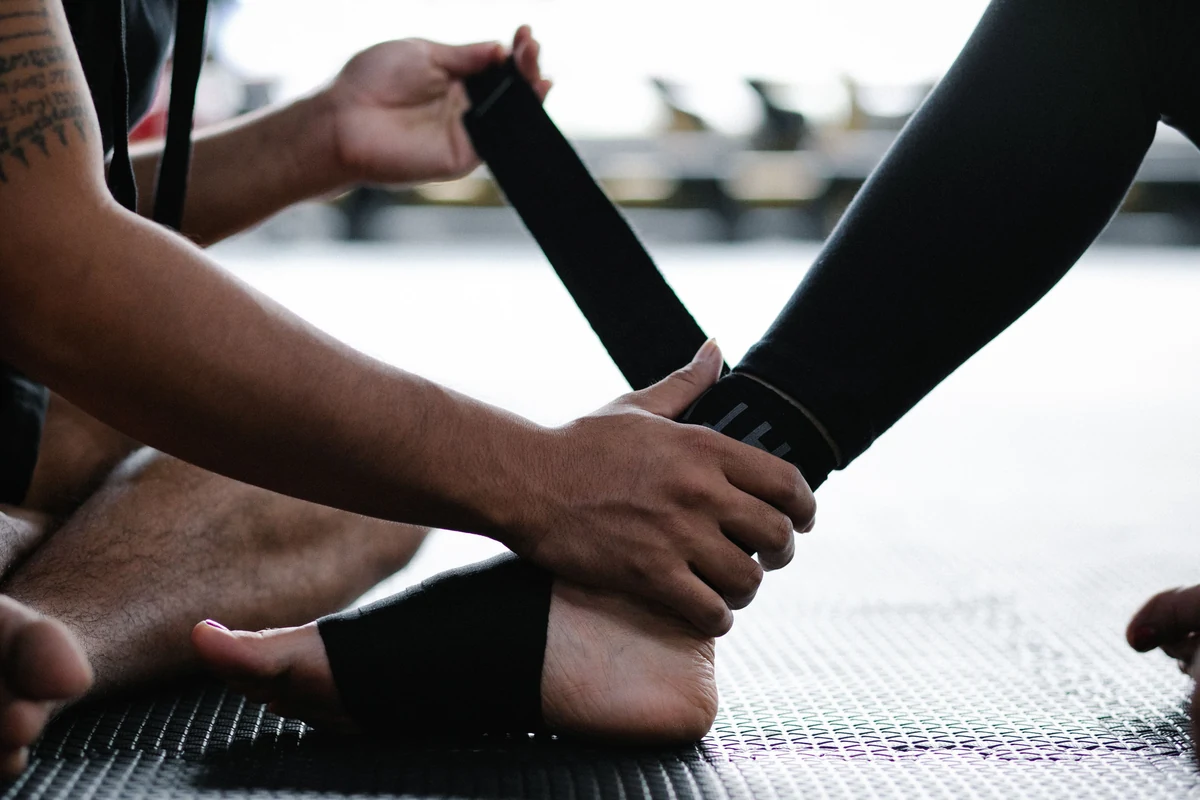
For a rolled ankle, what to do first is simple: stop the activity and protect the joint. Do not test it with another sprint or jump.
- Protect and support it. A brace, supportive shoe, or walking aid can limit painful motion. Do not force weight bearing if you cannot walk safely.
- Use cold for comfort. Apply a wrapped cold pack for short periods. Keep ice off bare skin and avoid it if sensation or circulation is reduced unless a clinician advises otherwise.
- Add gentle compression. A snug elastic wrap may help swelling, but loosen it if the toes become numb, pale, blue, cold, or increasingly painful.
- Elevate the ankle. Raise it above heart level when practical, especially during the first day.
- Begin comfortable motion when safe. Gentle ankle pumps or drawing small letters with the foot may reduce stiffness, provided there is no fracture concern and the movement does not sharply increase pain.
Clinical guidance favors progressive weight bearing with support and structured exercise for many lateral sprains. Severe injuries may need brief immobilization based on a clinician’s assessment (JOSPT clinical practice guideline).
Signs of a twisted ankle that may be a fracture
Sprains and fractures overlap. Both can swell, bruise, and hurt with walking. Clinicians often use the Ottawa Ankle Rules to help decide whether X-rays are needed, but these rules require correct examination and do not replace medical judgment.
Arrange prompt assessment when there is:
- Inability to take four steps after the injury and at evaluation
- Sharp tenderness directly over the back edge or tip of either ankle bone
- Tenderness at the base of the fifth metatarsal on the outside of the foot
- Tenderness over the navicular on the inner midfoot
- An obvious deformity, open wound, or a snap with immediate loss of function
- Numbness, a cold or pale foot, or rapidly increasing tight swelling
- Pain above the ankle, calf pain, or pain that is getting worse instead of better
A 2021 guideline recommends the Ottawa Ankle Rules to help determine when radiographs are appropriate (Academy of Orthopaedic Physical Therapy). Some patients need a lower threshold for examination.
Sprain ankle swelling: what is normal?
Sprain ankle swelling can increase through the first day, and bruising may drift toward the heel or toes. That does not automatically mean the ligament is tearing further.
The trend matters. Pain and function should gradually improve. Seek care if swelling is extreme, the skin becomes tense, pain is out of proportion, the athlete cannot bear weight, or there is no meaningful improvement over several days. Do not use reduced swelling as the only clearance to play. Ligament control and balance can lag behind appearance.
Twisted ankle how to treat after the first few days
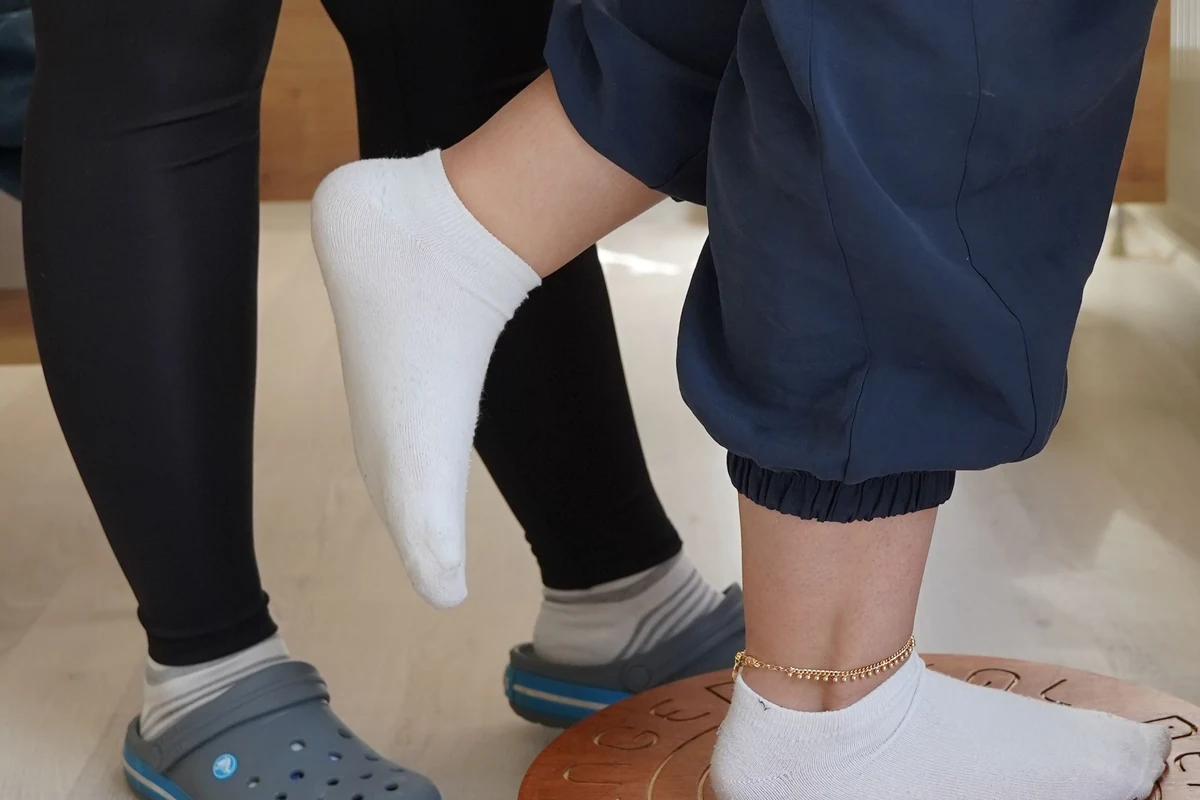
For the search “twisted ankle how to treat,” the missing answer is often rehabilitation. Once fracture and other serious injuries are excluded, recovery usually progresses through motion, strength, balance, and sport-specific control.
Rehabilitation may include:
- Restoring comfortable ankle motion, especially the ability to bring the knee forward over the foot
- Calf raises and resisted ankle work to rebuild strength
- Single-leg balance and reaction drills
- Hopping, landing, cutting, and acceleration drills when earlier tasks are pain-free
- Bracing or taping during the early return to practice when appropriate
The JOSPT guideline supports structured exercise that includes protected motion, stretching, strength, and balance training to address ankle instability (JOSPT). General podiatry care can coordinate diagnosis, bracing, and progression when recovery stalls.
How long does an ankle sprain take to recover?
Recovery cannot be predicted by grade alone. A mild sprain may settle within days to a couple of weeks, while moderate and severe injuries can take several weeks. High ankle sprains often recover more slowly.
Before unrestricted sport, an athlete should complete the following without pain, swelling, giving way, or protective movement:
- Walk and use stairs normally
- Move the ankle close to the uninjured side
- Perform repeated calf raises
- Balance on one leg
- Hop, land, accelerate, decelerate, and change direction
- Complete a progressive practice and recover without a symptom flare
A staged return may start with individual drills, then non-contact practice, full practice, and competition.
Ankle sprain Marietta: when should an athlete come in?
Book an injury evaluation now if a fracture is possible, walking is difficult, pain sits above the ankle, the joint feels unstable, or the athlete is not steadily improving. Repeated rolls, clicking, locking, or swelling that returns with every practice also deserve assessment. Learn about Dr. Vivian Iwu’s foot and ankle training.
Book an injury evaluation at Choice Podiatry Center in Marietta. Call (770) 702-8723.