
A patch of peeling skin between the toes or a toenail that has become thick and yellow may seem like a cosmetic summer annoyance. Both can be signs of a fungal infection—and the skin and nail problems may be connected.
Warm weather means more sweat, damp shoes, public pools, locker rooms, and barefoot exposure in shared spaces. Those conditions make summer foot fungus easier to pick up and harder to ignore.
Athlete's foot often responds to appropriate topical treatment. Toenail fungus is usually more stubborn because medication must reach an infection protected beneath or within the nail. Knowing which problem you have is the first step toward choosing treatment that actually fits it.

Why Fungal Foot Infections Become More Noticeable in Summer
Fungi grow well in warm, moist environments. Sweaty socks, damp shoes, pool decks, public showers, and locker-room floors can create repeated exposure.
Risk also rises when shoes do not dry fully between uses, feet stay wet for long periods, or towels, shoes, and nail tools are shared. Small cracks in the skin may make it easier for infection to spread.
Athlete's foot can also reach the toenails, while an infected nail may act as a source of reinfection for nearby skin. That is one reason treating only the itch—but ignoring a thick fungal nail—may lead to repeated problems.
Athlete's Foot: What It Looks Like and How It Spreads
Athlete's foot, or tinea pedis, is a fungal infection of the skin. It commonly appears between the toes but can also affect the sole and sides of the foot.
Possible signs include:
- Itching, burning, or stinging
- Peeling, scaling, or cracking skin
- Whitish, soggy skin between the toes
- Dry, flaky skin along the sole
- Small blisters or raw areas
- Odor related to moisture or secondary bacterial growth
It can spread through direct skin contact or contaminated floors, towels, socks, shoes, and grooming tools.
Why over-the-counter treatment sometimes fails
OTC antifungal creams, sprays, and powders can work for uncomplicated athlete's foot when the correct product is used consistently for the full recommended period.
Treatment may fail when:
- The rash is not fungal
- Medication is stopped as soon as itching improves
- The product is applied inconsistently
- Shoes and socks remain damp or contaminated
- A fungal toenail keeps reintroducing infection
- Steroid cream masks or worsens the appearance
- The infection is extensive or resistant
Do not use a steroid cream alone on a rash that may be fungal unless a clinician has advised it. Steroids can change the appearance and allow some fungal infections to spread.
Toenail Fungus: Why It Is So Stubborn
Toenail fungus, or onychomycosis, may cause the nail to become:
- Yellow, white, brown, or cloudy
- Thickened
- Brittle or crumbly
- Distorted in shape
- Lifted from the nail bed
- Surrounded by debris
- Difficult or painful to trim
These changes are not always caused by fungus. Trauma, psoriasis, pressure from shoes, aging, and other nail conditions can look similar. Testing a nail sample may be recommended before committing to months of treatment.
Fungal nails rarely clear quickly because toenails grow slowly and the infection sits in or beneath a hard nail plate. Even after treatment controls the fungus, the damaged portion must grow forward before the nail looks clearer. Visible improvement may therefore take many months.
Prevention Habits That Actually Help
No prevention method is perfect, but reducing moisture and shared-surface exposure lowers risk.
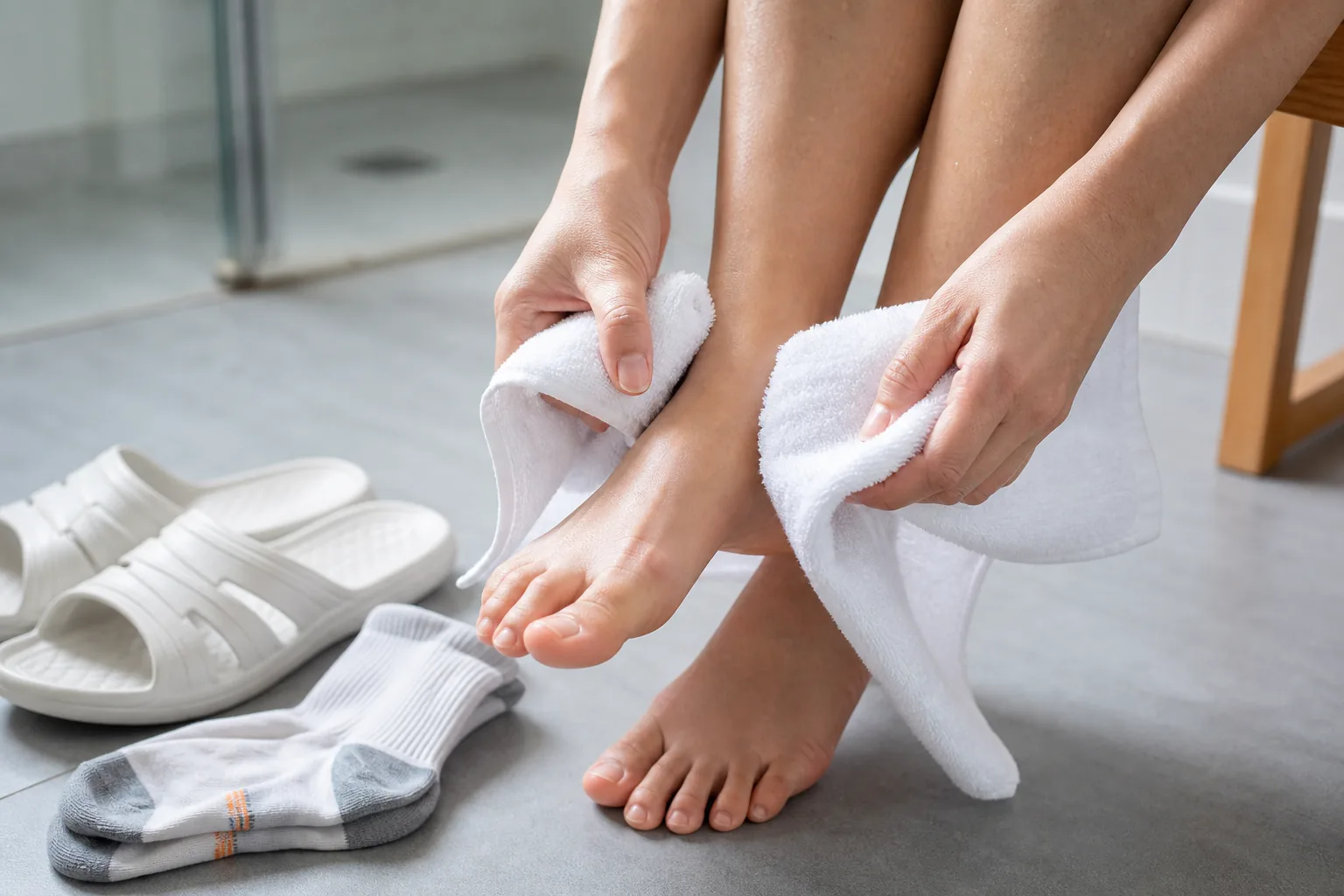
- Wash the feet daily and dry carefully between the toes.
- Change socks every day and again after heavy sweating.
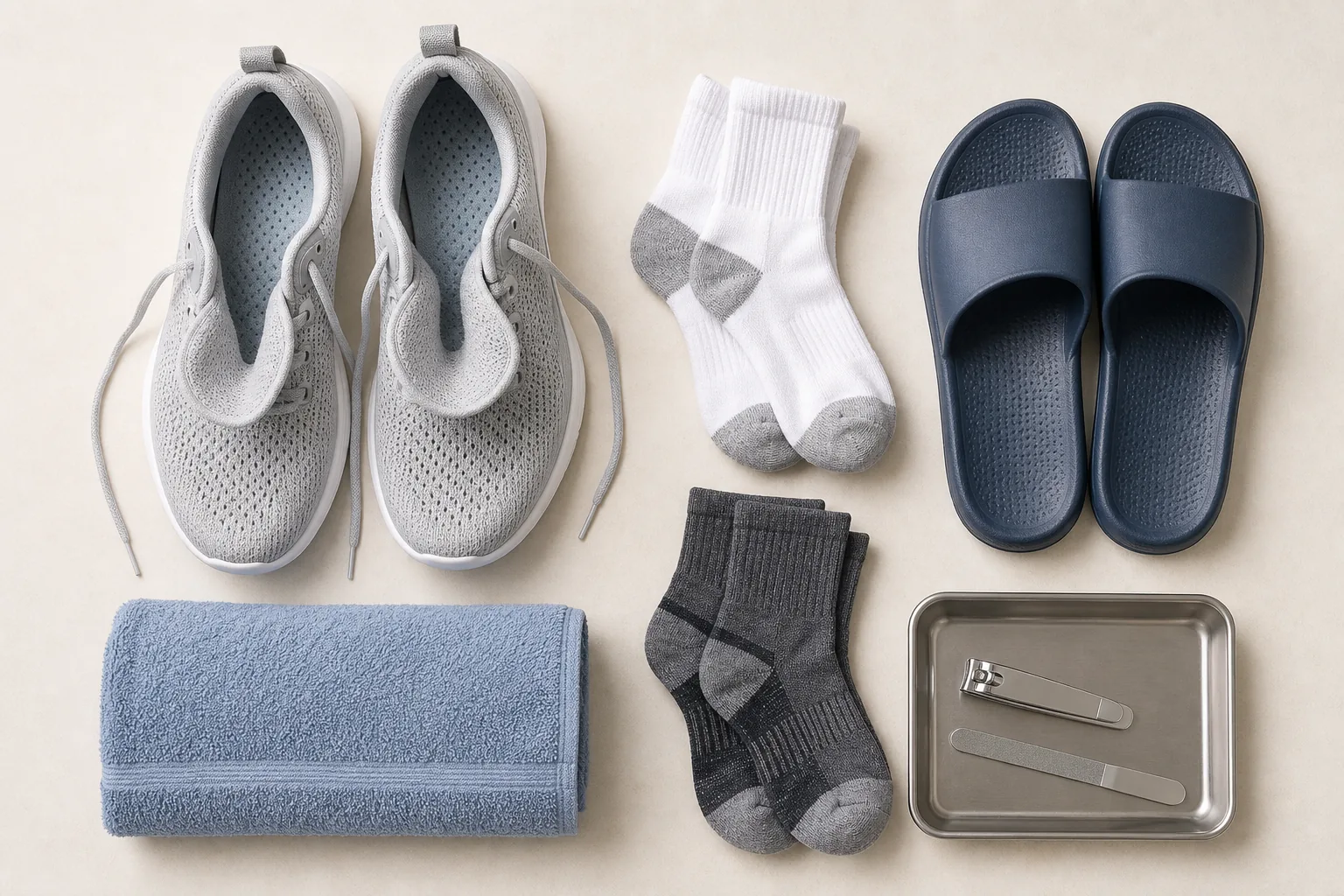
- Choose breathable shoes and moisture-wicking socks.
- Rotate shoes so each pair can dry fully.
- Wear sandals in public showers, locker rooms, and pool areas.
- Do not share shoes, socks, towels, clippers, or nail files.
- Keep nails trimmed without cutting into the corners.
- Disinfect reusable nail tools after use.
- Treat athlete's foot early so it is less likely to spread to the nails.
- Avoid putting damp feet into closed shoes.
People who use nail salons should choose a clean, licensed facility that follows proper instrument-sterilization practices.
Treatment Options: Topical, Oral, Laser, and Cosmetic Restoration
The best treatment depends on whether the infection involves skin, nail, or both; how many nails are affected; how thick they are; and your medical history.
Topical treatment
Topical antifungals are often appropriate for athlete's foot. They may also be prescribed for selected mild fungal nail infections, but nail treatment must continue much longer because penetration through the nail is difficult.
The surrounding nail may need professional thinning or debridement to improve comfort and help medication reach the affected area.
Oral antifungal medication
Prescription oral antifungals may be more effective for moderate or extensive toenail fungus. They are not appropriate for every patient and can interact with other medications or require health and laboratory review.
The medication course may finish before the nail looks normal because healthy nail still has to grow out.
Laser treatment
Some practices offer laser procedures for fungal nails. Results vary, and laser should not be described as a guaranteed cure. Ask what device is used, what outcome it is cleared or intended for, how many sessions may be needed, and whether it will be combined with medication or nail care.
KeryFlex cosmetic restoration
KeryFlex can improve the appearance of a suitable damaged or post-fungal nail by creating a flexible, natural-looking cosmetic surface. It does not cure active fungus and should be paired with appropriate evaluation and treatment when infection is present.
Explore Choice Medi Spa, our professional skin and nail care services, and our guide to KeryFlex cosmetic nail restoration.
A Special Note for People With Diabetes or Reduced Immunity
Do not rely only on self-treatment when you have diabetes, neuropathy, poor circulation, an immune-system condition, or take medication that suppresses immunity.
Cracked skin can provide an entry point for bacteria, while reduced sensation may prevent you from noticing an injury. A thick nail can also press against nearby skin or make trimming hazardous.
Seek prompt care for redness, warmth, swelling, drainage, an open sore, rapidly worsening pain, fever, or discoloration that suggests reduced blood flow.
Learn more in our diabetic foot care guide.
When to Self-Treat and When to See a Podiatrist
Self-treatment may be reasonable when:
- The rash is mild and limited to intact skin
- You do not have diabetes, poor circulation, neuropathy, or reduced immunity
- There is no open wound, drainage, major swelling, or severe pain
- You can follow the OTC antifungal label exactly
- Symptoms are improving steadily
Schedule an evaluation when:
- The diagnosis is uncertain
- An OTC antifungal has not worked as directed
- The infection repeatedly returns
- A toenail is thick, painful, lifting, or difficult to trim
- Several nails are affected
- Skin and nail symptoms occur together
- You want to discuss prescription or cosmetic options
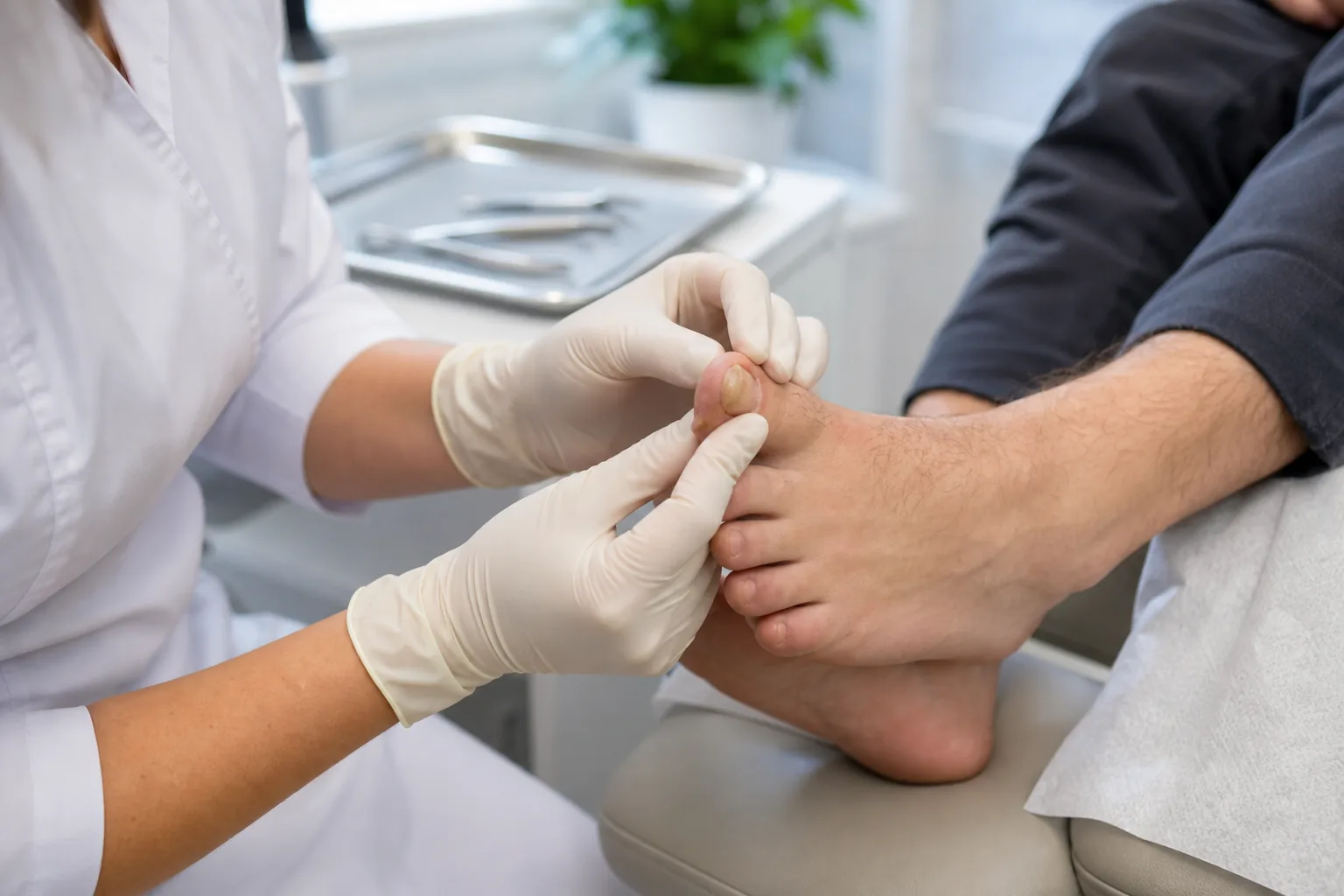
A podiatrist can examine the skin and nails, consider laboratory testing, reduce painful nail thickness when appropriate, and build a treatment plan around your health and goals.
Clearer Skin and Nails Start With the Right Diagnosis
Athlete's foot and toenail fungus are related, but they are not treated in exactly the same way. Skin infection may respond relatively quickly to topical medication. Nail infection usually requires more patience, careful diagnosis, and a longer-term plan.
Avoid miracle-cure promises. Use proven antifungal medication as directed, keep the feet and shoes dry, and seek professional help when the condition is persistent, painful, recurrent, or medically higher risk.

For athlete's foot or toenail fungus treatment with Dr. Vivian Iwu, call Choice Podiatry Center in Marietta at (770) 702-8723.
Learn more about Dr. Vivian Iwu and Choice Podiatry Center.
Medical note: This article provides general education and does not replace diagnosis or individualized treatment. A discolored or thick nail is not always fungal. Medication suitability and results vary.
Frequently Asked Questions
Is athlete's foot the same fungus as toenail fungus?
Both are commonly caused by dermatophyte fungi, and infection can spread between the skin and nails. However, the location and treatment duration differ.
Can athlete's foot go away without treatment?
Symptoms may temporarily improve, but untreated infection can persist, return, or spread. Appropriate antifungal treatment and moisture control are usually recommended.
What is the best over-the-counter treatment for athlete's foot?
Several over-the-counter antifungal ingredients are available. The appropriate product depends on the rash and your health. Follow the product label for the full treatment period and seek care if the diagnosis is uncertain or symptoms do not improve.
Why is toenail fungus harder to treat?
The infection lies within or beneath the nail plate, where topical medication may penetrate poorly. Toenails also grow slowly, so visible clearing takes time even after treatment is working.
Do oral antifungal pills cure toenail fungus?
Oral medication can be effective, but no treatment guarantees a permanent cure. Reinfection and recurrence can occur, and oral drugs are not suitable for every patient.
Does laser cure fungal toenails?
Laser results vary, and it should not be promoted as a guaranteed cure. Ask the provider about the device, evidence, intended outcome, number of sessions, and whether other treatments are recommended.
Can KeryFlex hide a fungal toenail?
KeryFlex may cosmetically restore a suitable damaged or post-fungal nail, but it does not treat active fungus. The nail should be evaluated first.
When should a person with diabetes seek care?
A person with diabetes should seek professional advice early, especially for cracked skin, wounds, redness, swelling, drainage, pain, or nail changes that are difficult to manage safely.