
Pharmacies, sporting-goods stores, and online shops offer countless cushioned insoles, arch supports, and “performance” inserts. Some custom devices are also promoted as the answer to nearly every kind of foot pain.
The honest answer is simpler: not everyone needs custom orthotics.
Many people improve with properly fitted shoes, activity changes, stretching, and a quality over-the-counter insert. Custom devices become more useful when standard support is inadequate, symptoms keep returning, or a medical condition requires precise pressure control.
This guide explains the difference between store-bought inserts and custom orthotics in Marietta, who may genuinely benefit, and what to expect before deciding whether they are worth the investment.
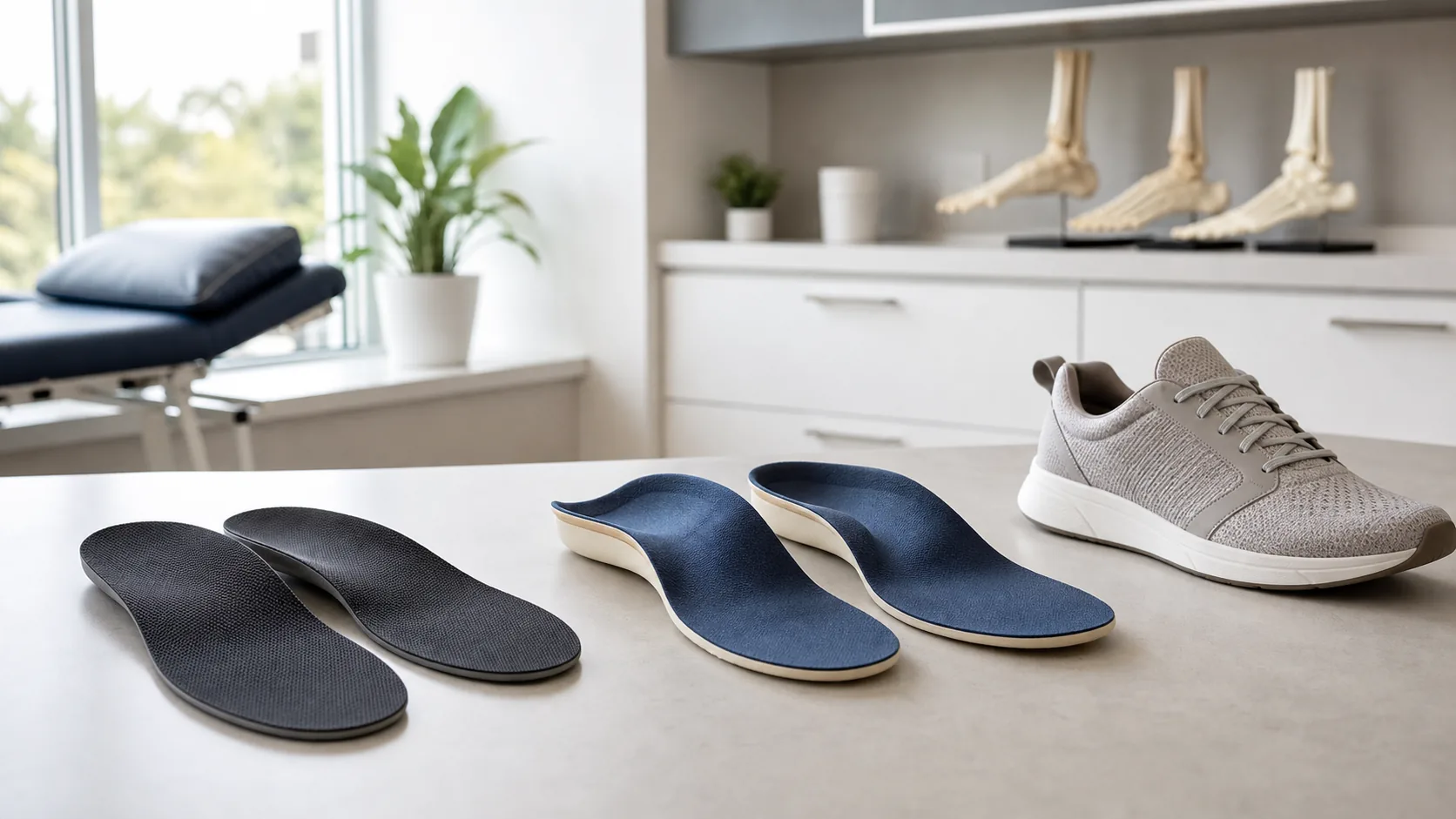
Start With the Honest Framing: Many People Do Fine Without Custom Devices
An orthotic is not automatically the first answer to foot pain. Replacing a worn, narrow, overly flexible, or activity-inappropriate shoe may make a major difference. A basic insert may also provide enough cushioning or support for mild symptoms.
Over-the-counter, or OTC, inserts are commonly reasonable when:
- Symptoms are mild and recent
- Both feet need similar support
- You mainly want cushioning or modest arch support
- Your foot shape fits a standard insert
- Pain improves with supportive shoes
- There is no ulcer, major deformity, severe instability, or complex medical need
The decision should begin with diagnosis, mechanics, footwear, activities, and simpler options already tried.
What Custom Orthotics Actually Are
Prescription custom orthotics are shoe inserts made for one individual. Instead of selecting a standard size from a shelf, the provider captures the shape and alignment of your feet using a mold, impression, or digital scan.
That model is combined with the examination and a prescription describing the support, cushioning, shape, and materials required.
A custom orthotic may be designed to:
- Redistribute pressure
- Support or accommodate an arch
- Influence excessive foot motion
- Improve how the foot functions inside the shoe
- Cushion a painful or high-pressure area
- Accommodate a deformity
- Support recovery after certain injuries or procedures
“Custom” should mean more than trimming a prefabricated insert. A true prescription device is selected and modified according to the patient’s foot structure and clinical needs.
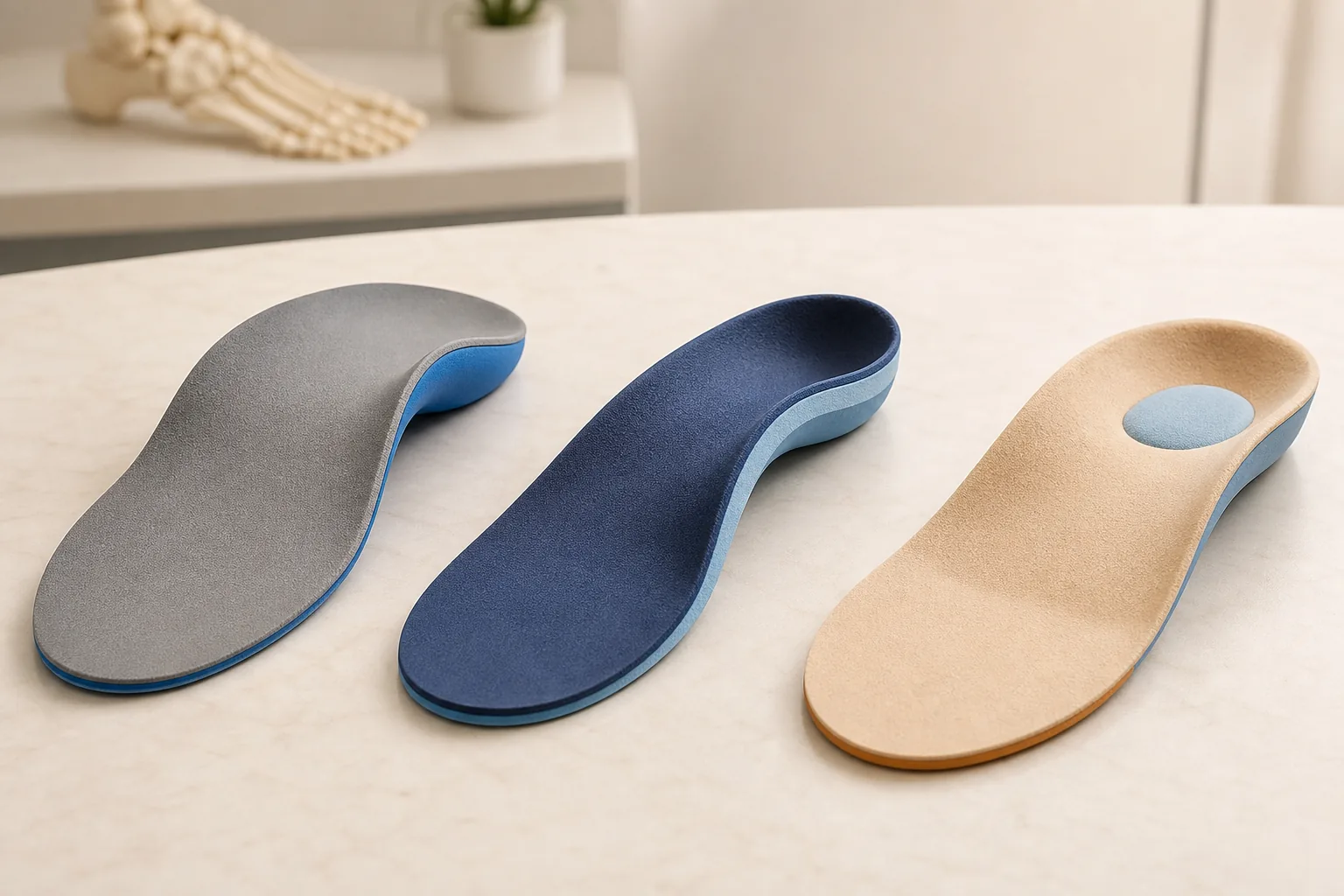
Custom vs. Over-the-Counter Orthotics
Neither option is universally better. Each has a role.
Over-the-counter inserts
OTC inserts are mass-produced in standard shapes and sizes. They cost less, are available immediately, and may work well for mild heel pain, fatigue, or temporary cushioning. Their limitation is that one support pattern must fit many different feet.
Custom orthotics
Custom devices are prescribed after assessment and allow more control over shape, material, pressure relief, and fit. They cost more, require fabrication and follow-up, and cannot compensate for every problem. Even a custom device may perform poorly inside an unsupportive shoe.
The practical question is which level of support is justified for the diagnosis and the individual.
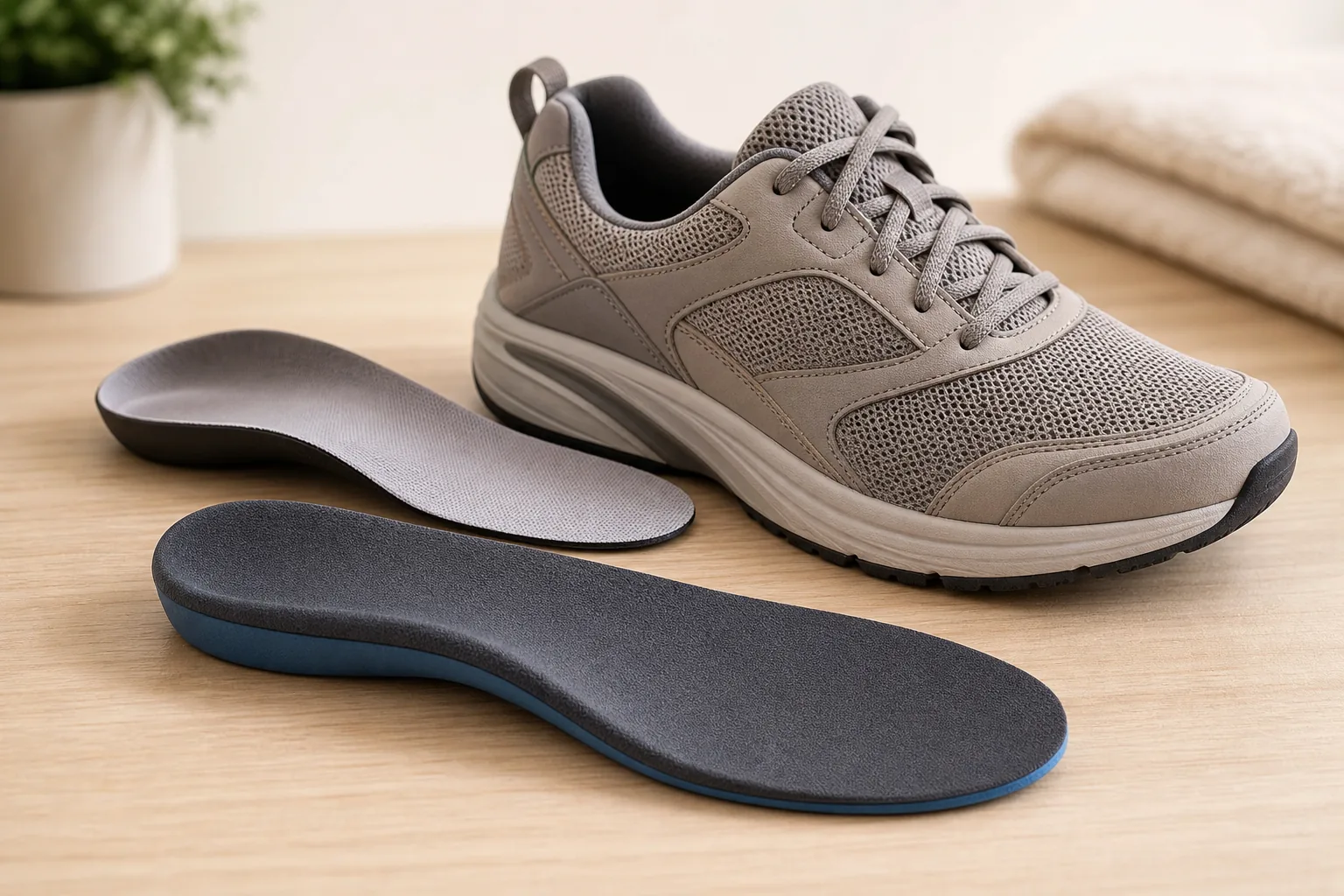
When an OTC Insert May Be Enough
A store-bought insert may be worth trying for mild, uncomplicated symptoms without warning signs. Early heel discomfort, for example, may improve with supportive shoes, calf stretching, reduced aggravating activity, and a well-fitted heel cup or arch-support insert.
Choose an OTC insert that:
- Fits the shoe without crowding the toes
- Feels supportive rather than painfully rigid
- Does not push the foot toward the side of the shoe
- Has enough depth and width for your foot
- Stays stable during walking
- Can be returned if the fit is wrong
Do not assume that the highest arch or firmest device is the most therapeutic. An insert that creates new pressure, numbness, blisters, or worsening pain should be removed.
When Custom Orthotics May Be Worth It
Custom devices may offer greater value when standard options fail or individualized control is required.
Recurring plantar fasciitis
Both pre-made and custom inserts may be used in conservative plantar-fasciitis care. Custom devices may be considered when symptoms recur or standard inserts do not provide adequate support.
Learn more about plantar fasciitis care.
Significant flat feet or high arches
A very low or very high arch may not match the shape of a standard insert. A custom device can be designed to support, accommodate, or redistribute force according to the individual foot.
Uneven gait or recurring overuse symptoms
Recurring heel, arch, forefoot, ankle, or tendon symptoms may relate partly to walking or running mechanics. An orthotic may be one part of the plan after movement and footwear assessment.
Diabetic pressure offloading
People with diabetes may develop pressure areas, neuropathy, deformity, or ulcer risk. Custom accommodative devices or specialized footwear may reduce pressure but do not replace skin checks and diabetic foot care.
Post-surgical or post-injury support
After certain foot or ankle procedures, fractures, or tendon injuries, a customized device may help support alignment or redistribute load during the later stages of recovery.
Structural differences or deformities
Bunions, arthritis, limb-length differences, prominent bones, or other structural concerns may require targeted accommodation that a standard insert cannot provide.
What the Custom-Orthotic Process Looks Like
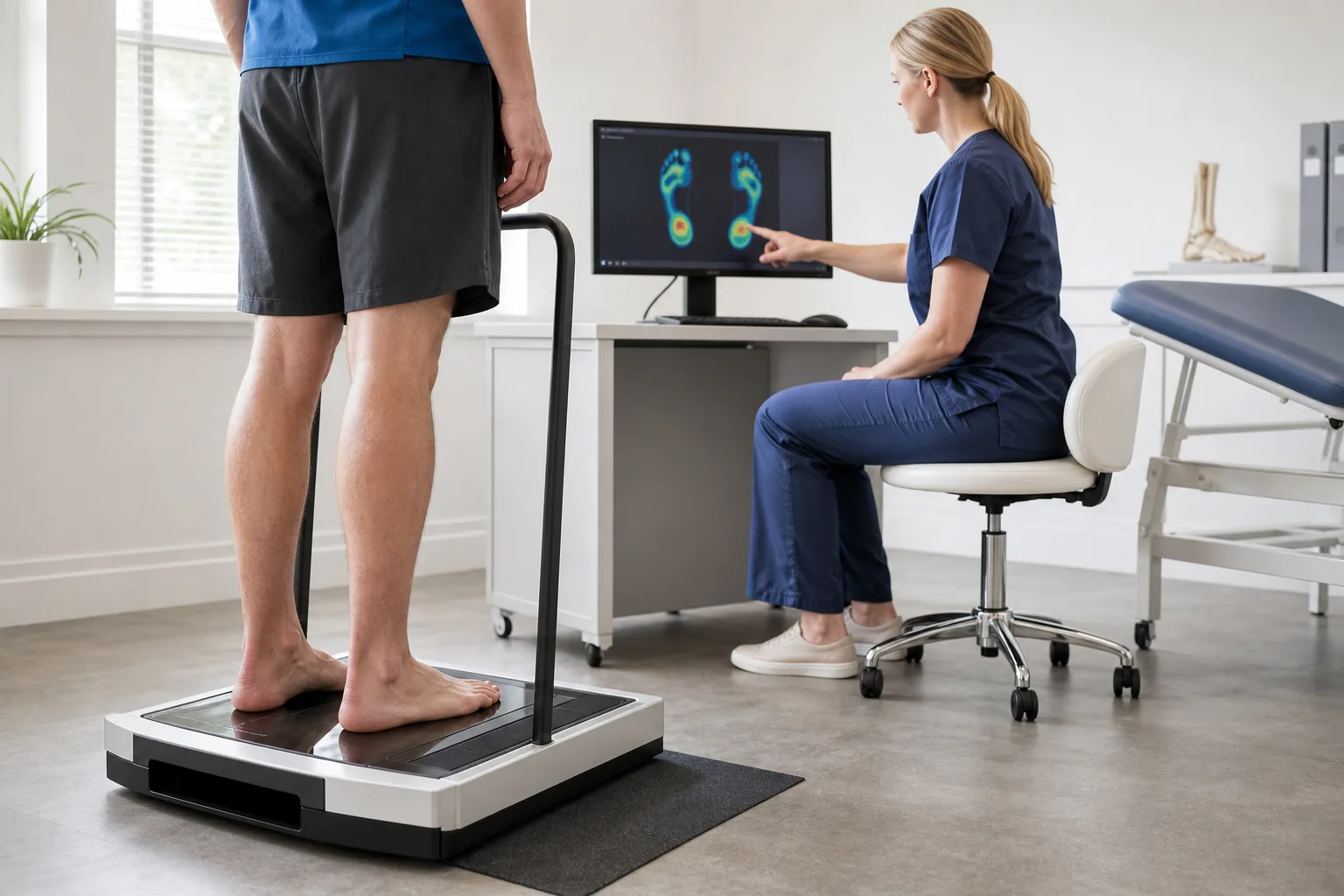
The process begins with an examination.
1. Clinical evaluation
Dr. Vivian Iwu reviews your symptoms, medical history, activities, previous treatments, and footwear. The examination may include foot structure, joint movement, strength, tender areas, standing alignment, and walking mechanics.
2. Mold, impression, or digital scan
The shape of each foot is captured to provide the laboratory or manufacturing system with a model.
3. Prescription and fabrication
The provider specifies the device type, materials, support, pressure-relief areas, and modifications needed for the treatment goal.
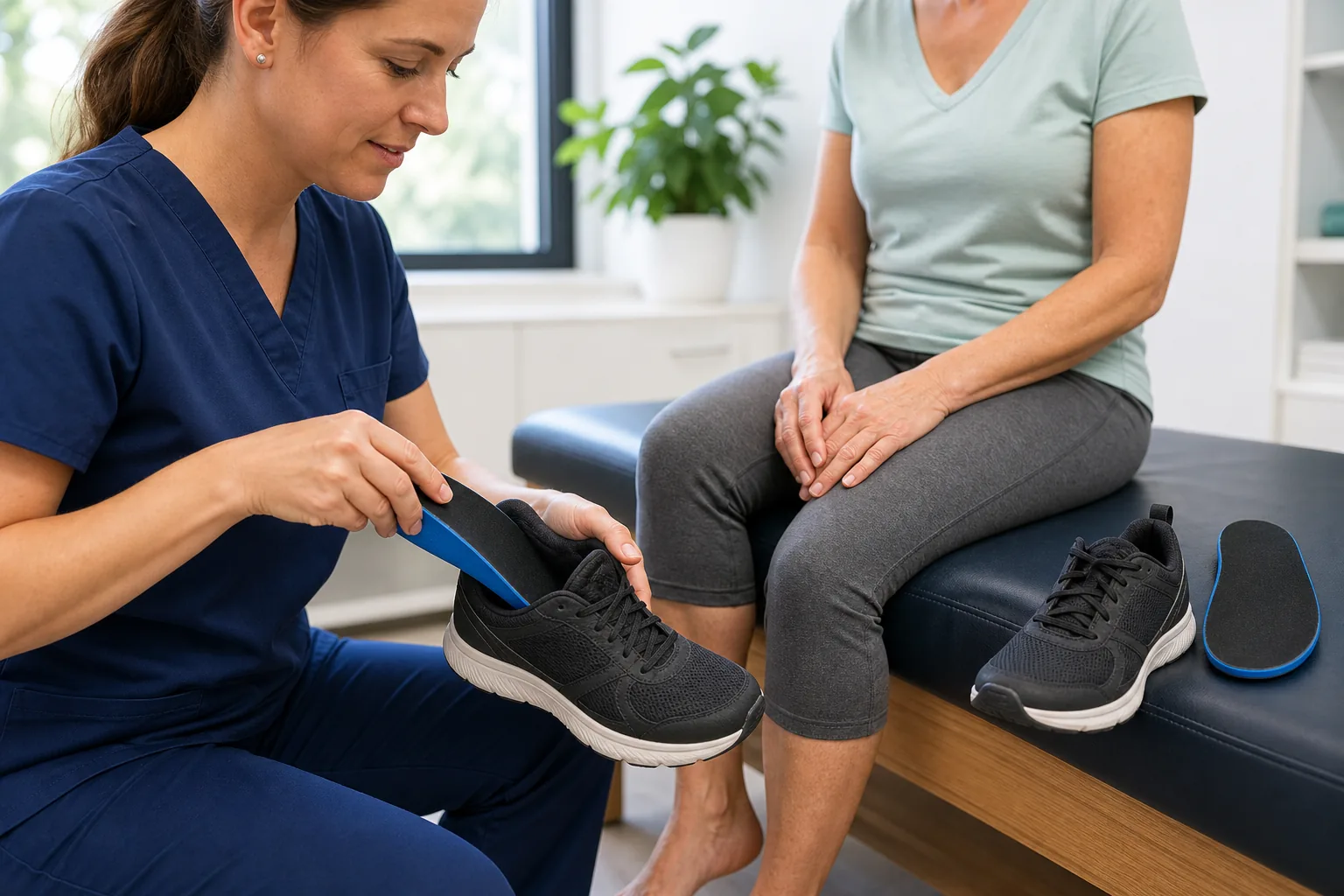
4. Fitting
When the orthotics arrive, they are checked inside the intended shoes. Fit, comfort, alignment, and heel stability are reviewed, and adjustments may be made.
5. Follow-up
Report persistent rubbing, pressure, slipping, or worsening symptoms. The device may need modification as footwear, activity, or the condition changes.
Realistic Expectations and the Break-In Period
Custom orthotics are tools, not instant cures. They may support a broader plan involving better shoes, exercises, activity changes, physical therapy, medication, or other care.
Your feet and legs may need time to adjust. Follow the practice’s instructions for gradually increasing wear rather than a generic online schedule.
During the adjustment period, mild awareness of the device may occur. Sharp pain, numbness, blisters, new joint pain, or major worsening is not something to push through.
Orthotics work best in compatible shoes with adequate width, depth, heel stability, and removable liners when possible.
Cost and Insurance
Custom orthotics cost more because the fee may include examination, scanning or casting, prescription, fabrication, fitting, and adjustments.
Coverage varies by plan, diagnosis, medical necessity, deductible, and orthotic benefit. Some plans cover part of the cost; others exclude it.
Before proceeding, ask what the fee includes, whether adjustments or remakes are covered, how insurance will be handled, what you may owe, and which shoes to bring.
How Dr. Iwu Decides Who Needs Them—Without the Upsell
At Choice Podiatry Center, the goal is not to put every patient into a custom device. Dr. Vivian Iwu first identifies the problem and considers whether footwear changes, an OTC insert, exercises, or another conservative option may be enough.
Custom orthotics are considered when the examination shows a reasonable clinical need for individualized support or pressure redistribution.
Because foot pain has many causes, an insert may help one condition and be irrelevant or uncomfortable for another. The diagnosis should come before the product.
Explore custom orthotic services and meet Dr. Vivian Iwu.
So, Do You Really Need Custom Orthotics?
You may not.
For mild, uncomplicated pain, better shoes and a quality OTC insert may be enough. Custom orthotics become more reasonable when symptoms recur, standard options fail, or individualized pressure control is needed.
The most useful answer comes from an examination.
To discuss footwear, inserts, or custom orthotics with Dr. Vivian Iwu, call Choice Podiatry Center in Marietta at (770) 702-8723.
Medical note: This article provides general educational information and does not replace an examination, diagnosis, or individualized orthotic prescription. Results vary, and orthotics are not appropriate for every type of foot pain.
Frequently Asked Questions
Are custom orthotics better than store-bought inserts?
Not automatically. A quality store-bought insert may be sufficient for mild symptoms and standard support needs. Custom orthotics may be more appropriate when the foot requires individualized support, accommodation, or pressure relief.
How are custom orthotics made?
A podiatrist examines the feet and captures their shape using a mold, impression, or digital scan. A prescription then specifies the device design, material, support, and modifications needed for the individual.
Do orthotics help plantar fasciitis?
Pre-made or custom orthotics may be included in conservative plantar-fasciitis care because they can add cushioning and support. They are usually combined with appropriate shoes, stretching, activity modification, and other treatment based on the diagnosis.
Can custom orthotics fix flat feet?
Orthotics do not permanently rebuild an adult arch. They may support the foot, improve comfort, redistribute pressure, or influence how the foot functions inside the shoe.
How long does it take to get used to custom orthotics?
Adjustment time varies. Patients are often instructed to increase wear gradually. Follow the practice’s specific break-in plan and report sharp pain, numbness, blisters, or worsening symptoms.
How long do custom orthotics last?
Longevity depends on materials, body weight, activity, footwear, growth, and changes in the feet. Devices should be reviewed when they become worn, uncomfortable, or no longer control symptoms effectively.
Does insurance cover custom orthotics?
Coverage varies significantly. Some plans provide an orthotic benefit when medical criteria are met, while others exclude the devices. Confirm benefits, deductibles, and expected out-of-pocket costs before fabrication.
Do I need a podiatrist before buying inserts?
A basic over-the-counter insert can often be tried without a prescription for mild symptoms. See a podiatrist when pain persists, repeatedly returns, causes limping, involves numbness or wounds, or when you are uncertain which type of support is safe.