
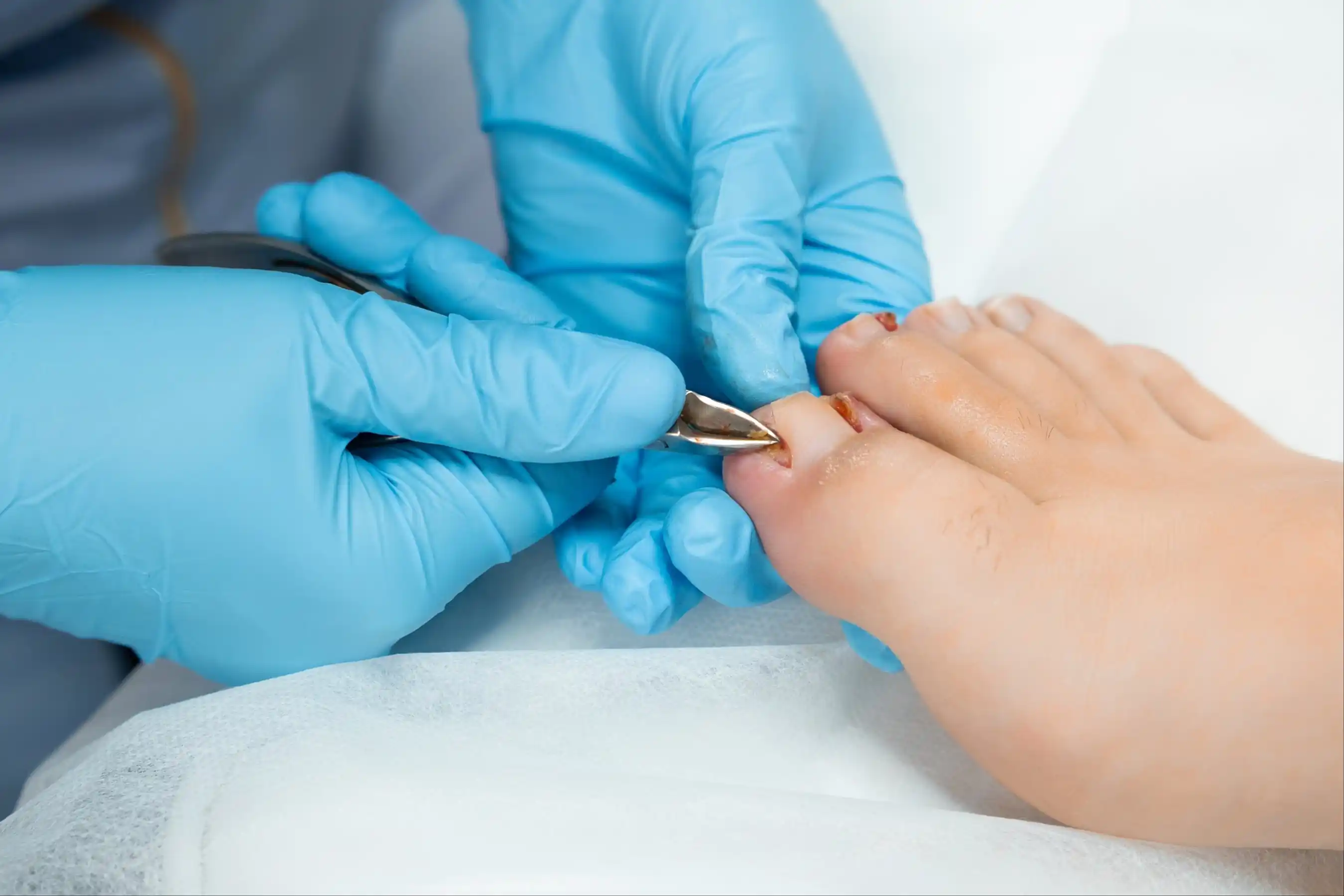
It starts as a minor annoyance — a slight tenderness on the side of your big toe. You ignore it, perhaps switching to looser shoes for a day or two. But soon, that annoyance turns into a throbbing ache that makes even the weight of a bedsheet feel unbearable. Ingrown toenails are one of the most common ingrown toenail removal in Marietta, yet many people suffer in silence or attempt dangerous "bathroom surgery" to fix them. While they might seem like a small problem, an untreated ingrown nail can lead to severe infection and chronic pain.
Why Ingrown Toenails Happen
An ingrown toenail, medically known as onychocryptosis, occurs when the edge or corner of the nail grows into the soft flesh of the toe. This causes redness, swelling, and pain, and while it can happen to any toe, the big toe is the most frequent victim. Three primary factors are usually to blame:
- Incorrect nail trimming — rounding the corners of the toenail to match the shape of the toe allows the skin to fold over the nail edge, and as the nail grows, it pierces that skin. This is the most common cause.
- Ill-fitting footwear — shoes that crowd the toes, such as narrow dress shoes, high heels, or tight running sneakers, press the skin against the sharp edge of the nail plate.
- Trauma or genetics — stubbing a toe can cause a nail to grow irregularly, and some people are genetically predisposed to curved, "pincer" nails that naturally dig into the skin.
7 Warning Signs of an Ingrown Toenail
- Pain and tenderness along one or both sides of the nail, often worse with tight or narrow shoes, or even light pressure from a sock or bedsheet.
- Redness around the nail, concentrated where the nail is piercing the skin, as the body's inflammatory response kicks in.
- Swelling of the toe, making it feel tight and sensitive, especially in shoes or while walking.
- Signs of infection — increased pain, throbbing, warmth, pus or yellowish drainage, or a foul odor coming from the toe.
- Overgrowing skin — soft, pinkish tissue (granulation tissue) that grows over the nail edge as the body tries to heal the wound, which can trap the nail further and worsen the problem.
- A feeling of pressure under the nail, even without significant pain, which can be an early sign the nail is beginning to curve downward.
- Difficulty walking — when pain and sensitivity become severe enough to cause a limp or a change in gait, which can lead to secondary pain in the foot, ankle, or knee.
The Do's and Don'ts of At-Home Care
| Category | The Right Way (Do This) | The Wrong Way (Avoid This) |
|---|---|---|
| Trimming | Cut straight across; leave the corners slightly visible above the skin line | Rounding the corners deep into the side of the nail bed |
| Pain Relief | Soak the foot in warm water with Epsom salts for 15-20 minutes | Using sharp tools to "dig out" the ingrown portion yourself |
| Footwear | Wear open-toed sandals or shoes with a wide toe box until healed | Wearing tight socks or narrow shoes that compress the swollen area |
| Medication | Apply an over-the-counter antibiotic cream and a bandage | Ignoring signs of infection like pus, excessive heat, or red streaks |
When to See a Podiatrist
| At-Home Care May Be OK | See a Podiatrist |
|---|---|
| Minor discomfort with slight redness | Signs of infection (pus, increased swelling) |
| No pus or significant swelling | You have diabetes or poor circulation |
| Symptoms are new and not severe | Pain is severe and affects your daily life |
| You are otherwise healthy | At-home treatments don't help after 2-3 days, or the condition keeps coming back |
Diabetics and those with poor circulation should never attempt to treat foot issues at home and should contact a podiatrist immediately upon noticing a problem, since even a small foot injury can lead to serious complications, including infections and ulcers.
Professional Treatments for Ingrown Toenails
When an ingrown toenail becomes too painful, gets infected, or keeps coming back, a podiatrist has the tools to treat it safely and effectively.
- Lifting the nail — for a mildly ingrown nail, your podiatrist may carefully raise the edge of the nail and place a small piece of cotton, dental floss, or a splint underneath it, separating the nail from the skin so it can grow above the edge instead of into it. This is repeated daily along with soaking until the nail grows out properly.
- Partial nail removal — for more severe cases with significant pain, redness, and swelling, your podiatrist numbs the toe and removes the portion of nail digging into the skin, immediately relieving pressure. For recurring cases, a chemical such as phenol may be applied to that section of the nail matrix (the area from which the nail grows) to prevent it from growing back — a procedure called a matrixectomy.
- Total nail removal — reserved for severe, chronic, or fungal-thickened nails where other methods have failed. The entire nail plate is removed under local anesthetic, and a new nail typically grows back over the following months.
- Antibiotics — if the toe is infected, your podiatrist may prescribe topical or oral antibiotics, depending on severity, to clear the infection before or alongside addressing the underlying nail.
All of these procedures are performed under local anesthetic, so you should not feel pain during the procedure itself, and most patients can walk immediately afterward and return to normal activities within a day or two.
Preventing Future Ingrown Toenails
- Cut your nails straight across, not rounded, leaving the corners visible
- Wear shoes with a wide, roomy toe box that don't crowd the toes
- Keep feet clean and dry to reduce infection risk
- If you have naturally curved nails that keep becoming ingrown despite good care, ask your podiatrist about a permanent matrixectomy to prevent that section of the nail from growing back
You do not need to limp through your day or dread putting on shoes. Ingrown toenails are highly treatable, and professional care can provide immediate relief from the pressure and pain. If your toe is throbbing, red, or infected, Choice Podiatry Center is ready to help.
Request an appointment with our team in Marietta, GA today.