
Summer should mean pool days, vacations, neighborhood walks, and more time outdoors—not sharp heel pain every time you stand up.
Yet summer foot pain in Marietta often begins after people replace supportive everyday shoes with thin flip-flops, flexible slides, or flat sandals. Add more walking and more barefoot time on pool decks, patios, hardwood, tile, or concrete, and the tissues supporting the bottom of the foot may become overloaded.
One common result is plantar fasciitis, a frequent cause of pain beneath the heel. Recognizing the warning signs early and improving your footwear may help keep a mild irritation from becoming a stubborn limitation.
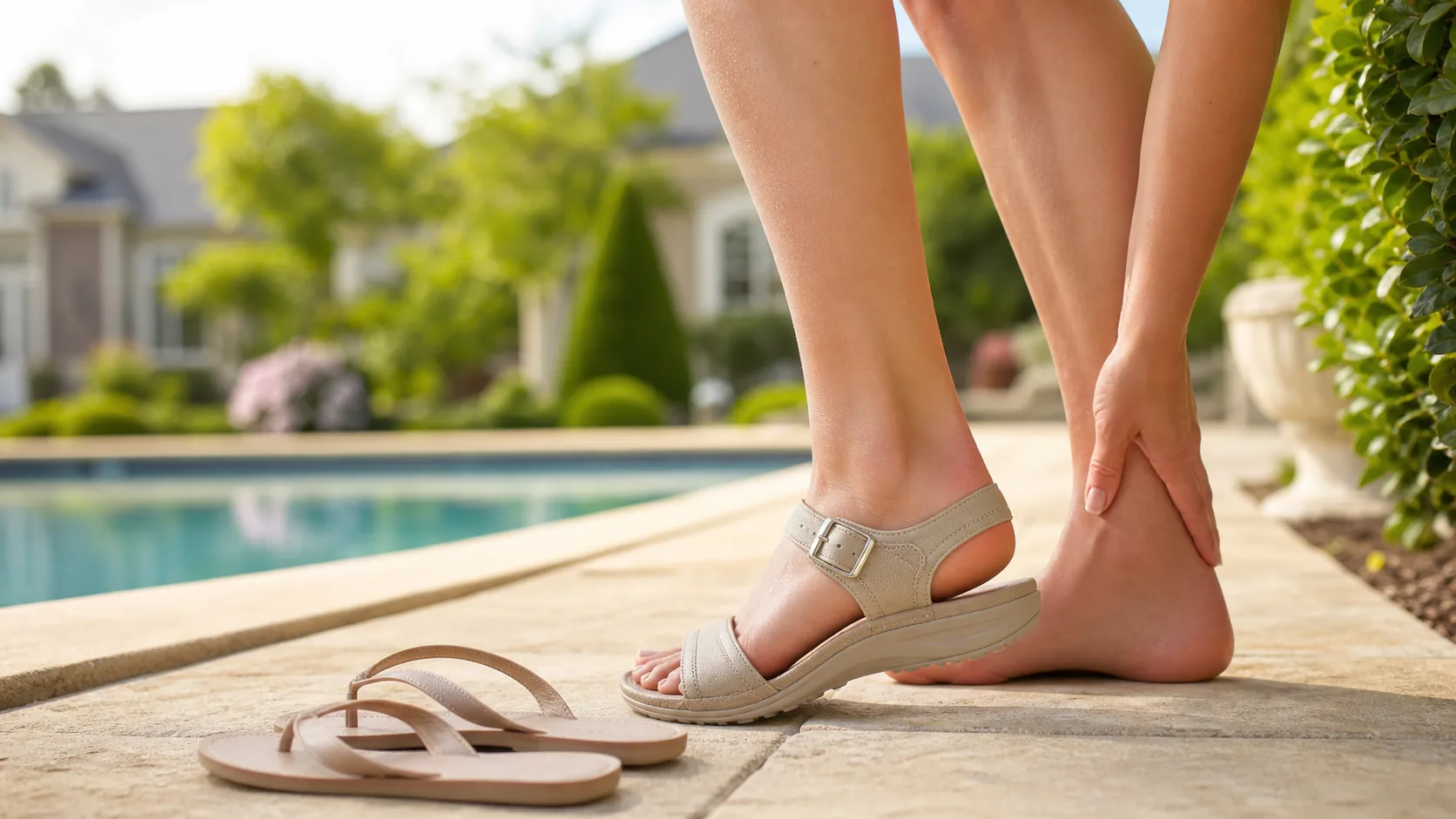
Why Heel Pain Often Flares During Summer
Summer changes both what we wear and how much we use our feet. You may walk farther at festivals, stand longer at cookouts, travel through airports, or spend full days sightseeing. At the same time, your shoes may provide less cushioning and structure than the sneakers or work shoes you usually wear.
The plantar fascia is a band of tissue that runs from the heel toward the toes, supports the arch, and helps absorb stress. Repeated loading without enough support can irritate the area where this tissue attaches near the heel.
This is why plantar fasciitis in summer may seem to appear suddenly. Often, the problem is the combined effect of less-supportive shoes, harder surfaces, increased activity, and too little recovery.
The Flat-Shoe Problem: Why Flip-Flops Can Trigger Heel Pain
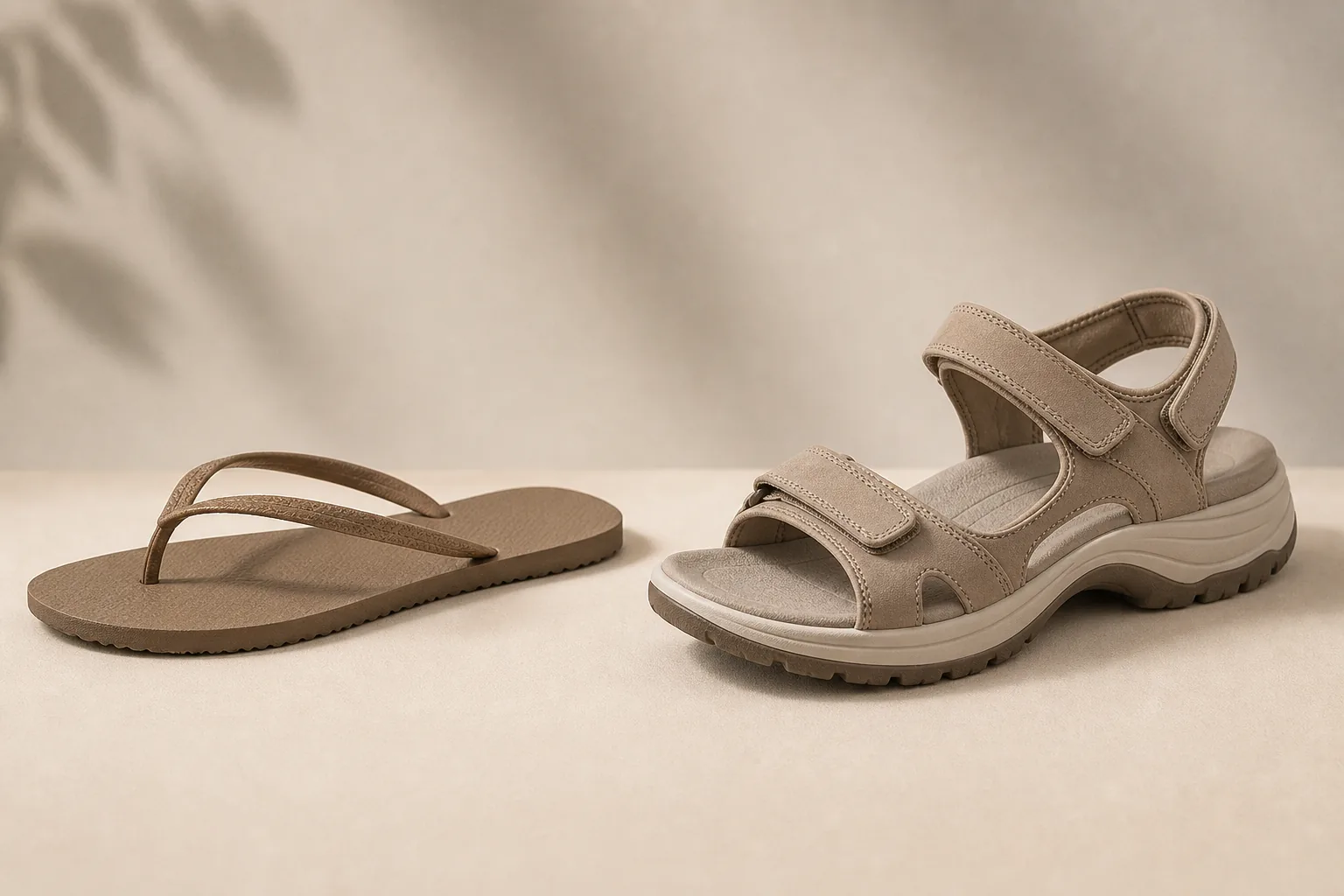
Not every sandal is harmful, but many basic flip-flops are little more than a flat piece of foam held to the foot by a toe post. They may provide little arch support, minimal heel cushioning, no stable heel cup, and no back strap.
Because the shoe is not secured to the foot, your toes may grip to keep it from sliding off. Long periods in a very flat, flexible pair can add fatigue through the foot and lower leg.
For someone already prone to heel pain, this can increase stress on the plantar fascia. Flip flop heel pain may appear as soreness under the heel, stiffness after rest, or pain during the first few steps in the morning.
A short trip to the pool may not be the issue. Wearing the same unsupported pair for errands, housework, sightseeing, and an evening out can be.
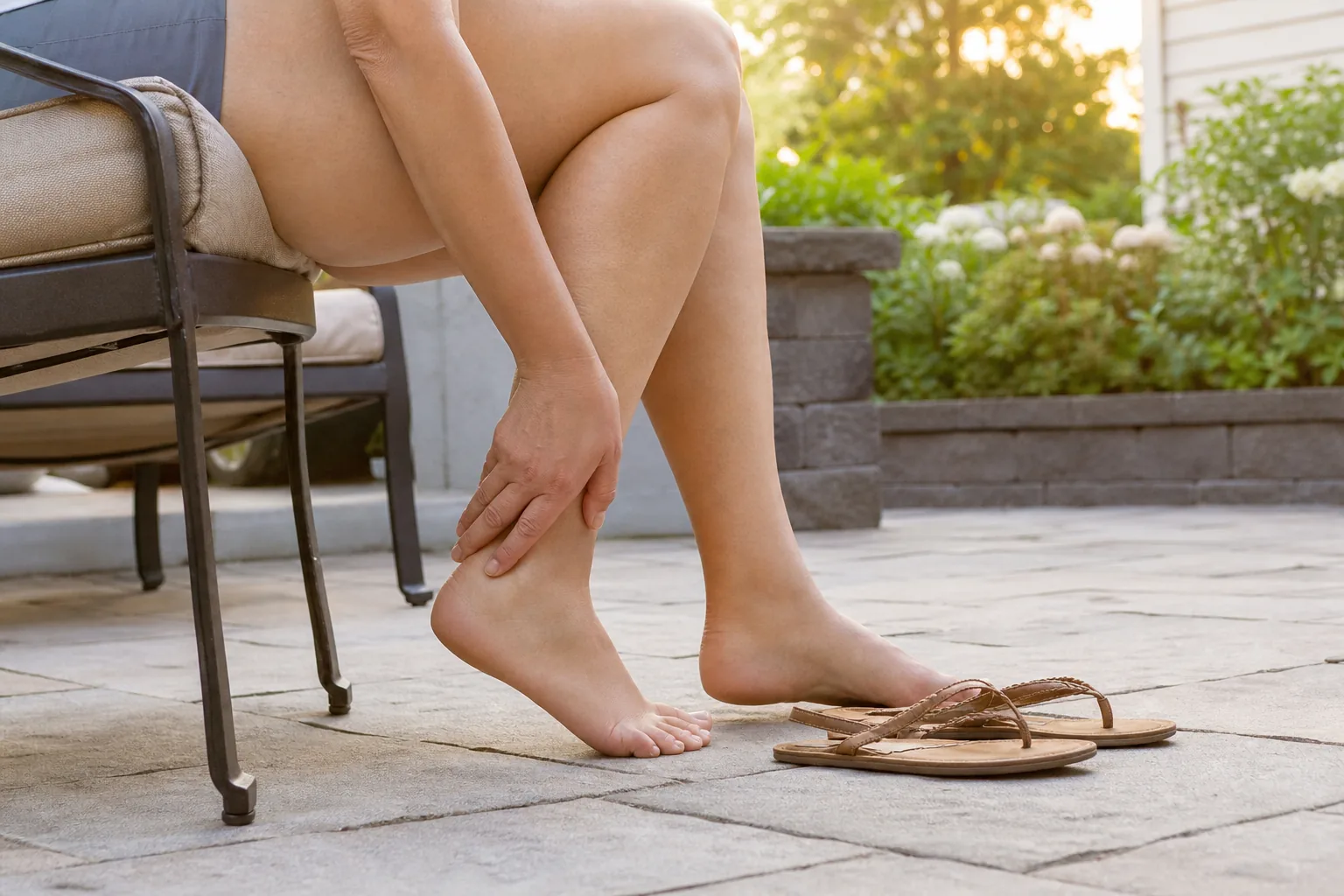
Barefoot on Hard Surfaces Adds More Load
Going barefoot can feel natural in warm weather, but pool decks, tile, patios, hardwood, and concrete provide little shock absorption. If your heel is already irritated, repeated barefoot steps may keep loading the painful area.
A supportive indoor sandal or recovery shoe may be more comfortable while symptoms settle. Learn more in our guide to plantar fasciitis treatment.
Three Early Warning Signs Your Summer Shoes Are Hurting You
1. Your first steps hurt after sleep or sitting
Pain under the heel when you get out of bed—or stand after a long drive, movie, or work session—is a common plantar fascia warning sign. It may ease after a few minutes and return later.
2. Your heel aches after a day in sandals
A sandal can feel soft without providing enough support. If your heel throbs after errands, a festival, a vacation day, or a long shift, the footwear may not match the activity.
3. You are changing how you walk
Limping, shortening your stride, or avoiding pressure on one heel means the pain is affecting normal movement. Compensation can place extra stress on the opposite foot and other joints.
Do not wait until every step hurts. Early footwear and activity changes are easier than calming a problem that has been building for weeks.
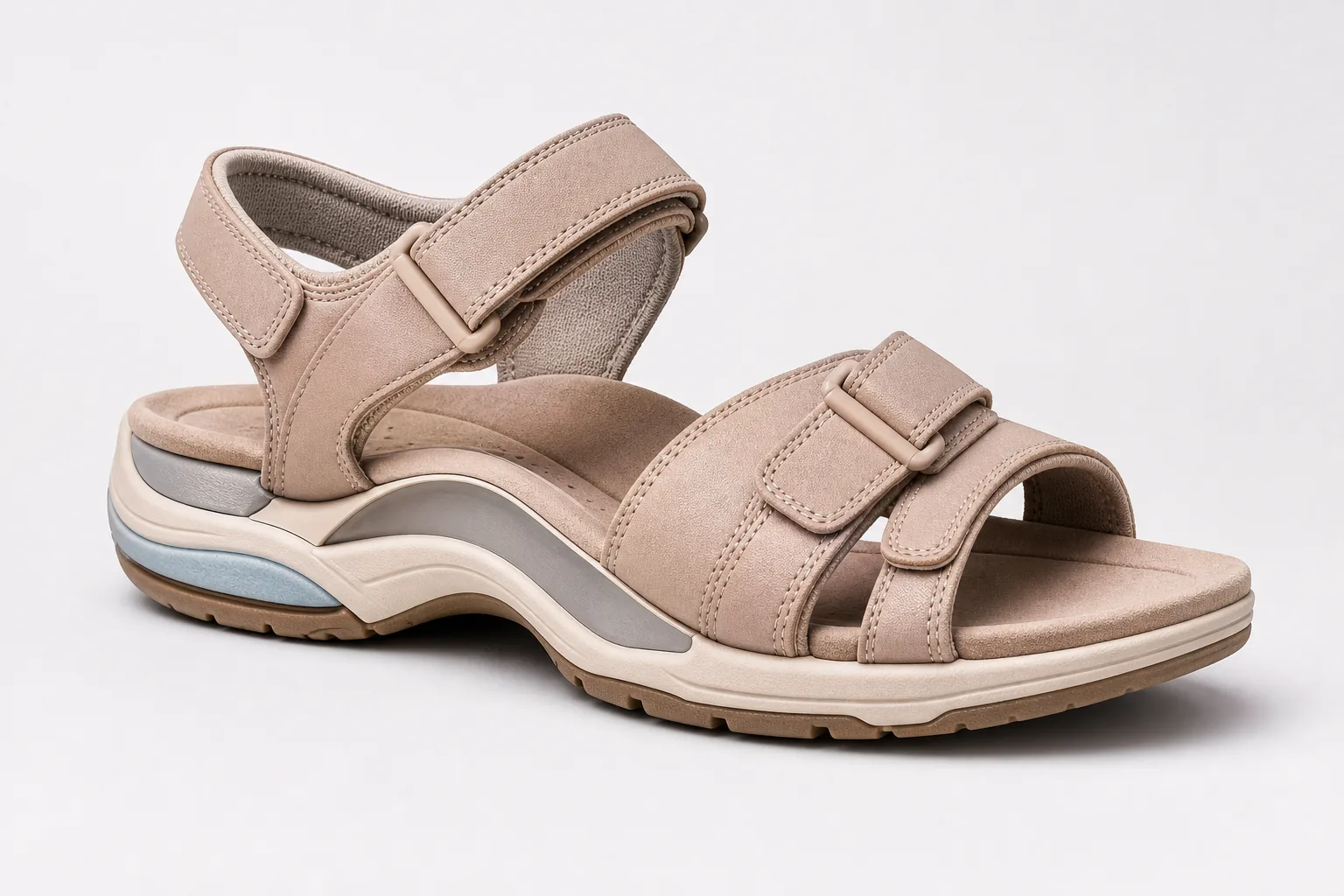
What to Look for in a Supportive Summer Sandal
The best summer shoes for foot pain are not defined by one brand. The important question is whether the shoe suits your foot, planned activity, and wearing time.
- A contoured footbed: The sole should follow the foot instead of being completely flat.
- A stable heel cup: A slightly cupped heel can improve stability.
- Structured cushioning: The sole should absorb impact without collapsing completely.
- A secure fit: Adjustable straps and a back strap help the sandal move with your foot.
- Resistance to twisting: The shoe should bend mainly near the ball of the foot, not fold easily through the middle.
- Enough toe room: Your toes and heel should sit fully within the footbed.
For long walks, exercise, travel days, or amusement parks, a supportive athletic shoe may still be better than an open sandal. Rotate footwear based on the activity rather than expecting one pair to handle every summer plan.
At-Home Relief for Mild Summer Heel Pain
If the pain is mild and there was no sudden injury, conservative steps may help.
Change your shoes
Pause the thin flip-flops and flat slides. Wear supportive shoes indoors and outdoors for several days and monitor whether first-step pain improves.
Stretch gently
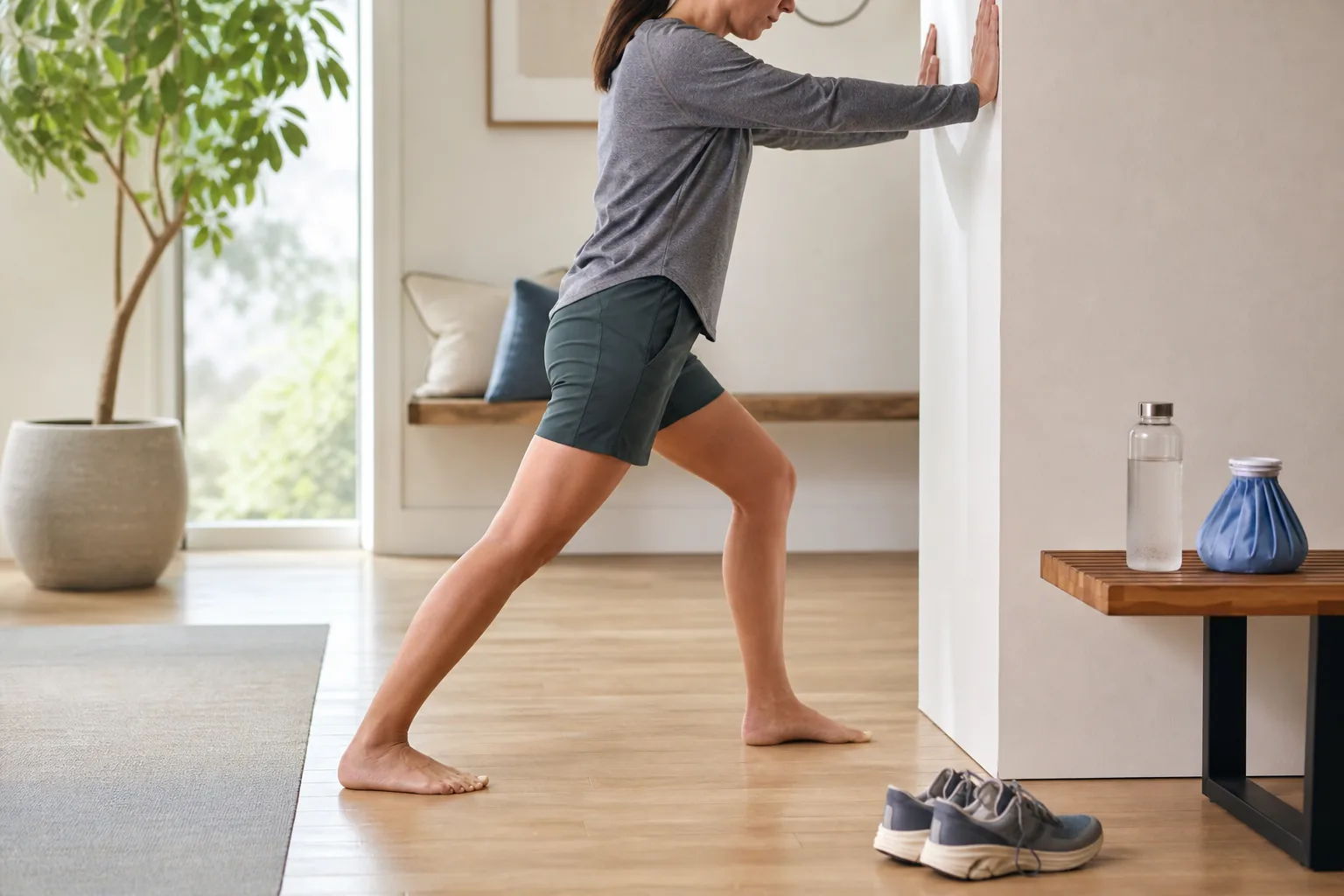
Try a wall calf stretch with the affected leg behind you and the heel on the floor. You can also sit, cross the sore foot over the opposite knee, and gently pull the toes back until you feel a stretch along the sole. Do not bounce or force the foot into sharp pain.
Use cold therapy safely
Apply a wrapped cold pack for up to 15–20 minutes, keeping a thin towel between the pack and your skin. Do not use cold therapy over numb skin or areas with poor circulation unless a clinician has advised you.
Reduce the activity that triggered it
Temporarily shorten walks, reduce high-impact exercise, and avoid long barefoot periods. You may not need complete rest, but the irritated tissue needs a chance to recover.
Rotate and inspect footwear
Alternate supportive pairs and retire shoes with compressed cushioning, uneven wear, or an excessively flexible sole.
These suggestions are general education, not a diagnosis. Heel pain can also come from Achilles tendon problems, stress injuries, nerve irritation, arthritis, or other conditions.
When It Is Time to See a Podiatrist
Schedule an evaluation when heel pain:
- Persists despite supportive footwear and reduced aggravating activity
- Keeps returning when you resume normal activity
- Is worsening, causing a limp, or limiting daily tasks
- Began after a fall, jump, misstep, or sudden training increase
- Comes with significant swelling, redness, warmth, numbness, weakness, or an open wound
Prompt professional care is especially important for people with diabetes, reduced sensation, circulation concerns, or a history of foot ulcers.
An accurate diagnosis matters. Treating every case as plantar fasciitis may delay care for another source of pain.
How Dr. Iwu Evaluates and Treats Heel Pain
At Choice Podiatry Center, Dr. Vivian Iwu starts by learning how the pain began, when it is worst, what shoes you wear, and whether your activity recently changed.
An evaluation may include checking the location of tenderness, foot and arch mechanics, ankle and calf flexibility, standing posture, walking pattern, and shoe wear. Imaging may be considered when symptoms suggest another condition.
Whenever appropriate, care can begin with conservative options tailored to the cause. These may include footwear changes, stretching, activity modification, padding or taping, orthotic support, physical therapy, or other nonsurgical treatments.
The goal is not simply to mask discomfort. It is to identify what is loading the painful area and build a plan that helps you return to normal movement safely.
Learn more about our podiatry services and meet Dr. Vivian Iwu.
Do Not Let Summer Shoes Control Your Summer
Choose sandals with structure. Avoid spending entire days in flat flip-flops. Use support on hard indoor surfaces when your heel is irritated. Most importantly, seek an evaluation when pain persists, worsens, or changes how you walk.
Ready to find the cause of your heel pain? Call Choice Podiatry Center in Marietta at (770) 702-8723 to schedule an evaluation with Dr. Vivian Iwu.
Medical note: This article provides general educational information and is not a substitute for an examination, diagnosis, or individualized treatment plan.
Frequently Asked Questions
Can flip-flops cause heel pain?
Flat, flexible flip-flops may contribute to heel pain because they often provide little arch support, cushioning, or heel stability. Risk may increase when they are worn for long walks, standing, exercise, or all-day use.
Why is my heel pain worse in summer?
Summer often combines less-supportive footwear with more walking, travel, outdoor activity, and barefoot time on hard surfaces. Together, these changes can increase stress on the plantar fascia and other heel structures.
What type of sandal is best for plantar fasciitis?
Look for a sandal with a contoured footbed, stable heel cup, supportive midsole, secure adjustable straps, and a sole that does not twist easily. The correct choice also depends on your foot shape and activity.
Should I walk barefoot when I have heel pain?
Barefoot walking on tile, hardwood, concrete, and pool decks may aggravate heel pain for some people. A supportive indoor sandal or shoe may be more comfortable while the area is irritated.
How long should I try home care before seeing a podiatrist?
Mild pain may improve after switching to supportive shoes, reducing aggravating activity, stretching gently, and using cold therapy. Arrange an evaluation sooner if pain is severe, worsening, linked to an injury, causing a limp, or accompanied by swelling, numbness, redness, warmth, or a wound.
Does plantar fasciitis require surgery?
Most plantar fasciitis care begins with nonsurgical treatment. The correct plan depends on the diagnosis, symptom duration, foot mechanics, activity level, and response to conservative care.