
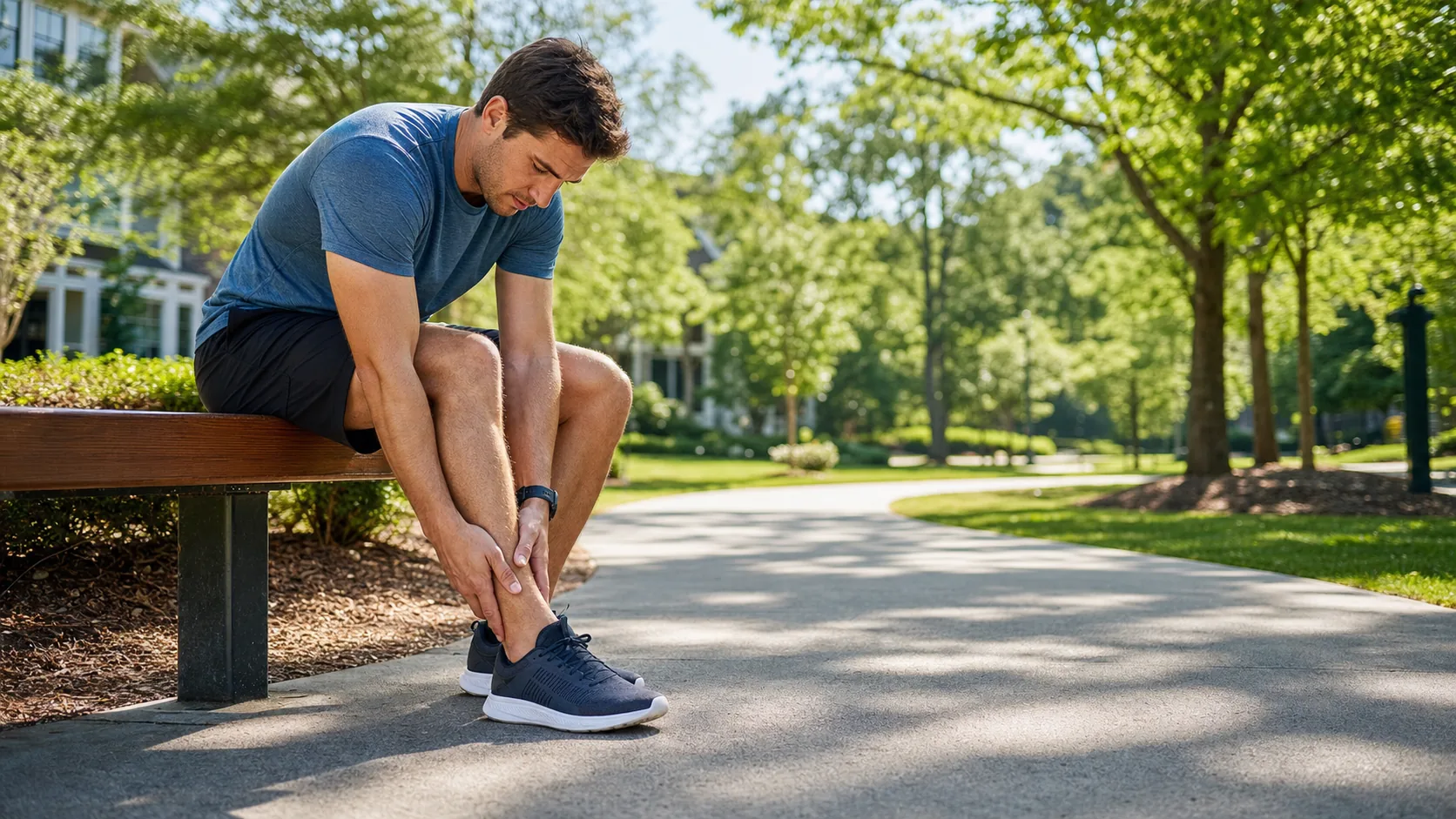
If you play a sport on artificial turf, or any sport that involves quick starts, cutting, and pushing off forcefully from the ground, you have probably at least heard the term "turf toe." It is one of those injuries that sounds minor until it actually happens to you, at which point most athletes quickly learn just how much a single joint in the big toe can affect their ability to run, jump, or even walk comfortably.
What Is Turf Toe?
Turf toe is a sprain of the main joint at the base of the big toe, known as the first metatarsophalangeal (MTP) joint. This joint is responsible for a large share of the push-off force generated every time you walk, run, or jump, which is why an injury here can be so disruptive to athletic performance.
The injury occurs when the big toe is forced upward beyond its normal range of motion, typically while the foot is planted and bearing weight, such as when pushing off explosively or when another player lands on the back of a planted foot. This hyperextension stretches or tears the ligaments and soft tissue that support the joint. The name comes from the injury's association with artificial turf, which tends to be less forgiving underfoot and can grip cleats more aggressively than natural grass, though turf toe can also occur on grass or any hard playing surface.
Who Is at Risk?
Turf toe is most common in sports that involve sprinting, cutting, and sudden acceleration or deceleration, including football, soccer, basketball, and dance. Athletes who wear very flexible shoes with little support in the forefoot are also at higher risk, since a stiffer sole helps limit how far the big toe joint can bend.
The injury can happen from a single traumatic event, such as another athlete landing on the heel while your foot is planted and your toe is bent upward, or it can develop gradually from repetitive stress on the joint over the course of a season.
Signs and Symptoms of Turf Toe
Symptoms of turf toe can range from mild to severe depending on the extent of the ligament injury, and often include:
- Pain at the base of the big toe, especially when pushing off or bearing weight
- Swelling and tenderness around the joint
- Stiffness and a reduced ability to bend the toe
- Bruising around the joint in more significant injuries
- A feeling of instability or "give" in the toe during activity
- In severe cases, a popping sensation at the time of injury
Many athletes initially try to play through turf toe, mistaking it for a minor stubbed toe. However, because this joint bears so much load with every step, continuing to play on an unaddressed injury can significantly worsen the ligament damage and prolong recovery.
How Turf Toe Is Graded
Podiatrists and sports medicine specialists typically classify turf toe by severity, which helps guide treatment and recovery expectations:
- Grade 1: A mild stretching of the ligament with localized tenderness and minimal swelling. Athletes can often continue activity with support, though symptoms should still be evaluated.
- Grade 2: A partial tearing of the ligament with more noticeable swelling, bruising, and restricted motion. This typically requires a period of rest and immobilization.
- Grade 3: A complete tear of the ligament complex, often with significant swelling, bruising, and joint instability. This more severe injury can take considerably longer to heal and, in some cases, may require further evaluation for surgical repair.
Treatment Options
Most cases of turf toe are treated conservatively, particularly when addressed early. Initial treatment generally follows a RICE-based approach:
- Rest from the aggravating activity, which may mean reduced playing time or a full pause depending on severity
- Ice applied to reduce swelling and pain in the acute phase
- Compression with taping or a wrap to support the joint
- Elevation of the foot to help control swelling
Depending on the grade of injury, a podiatrist may also recommend a stiff-soled shoe or a rigid insert to limit motion at the joint while it heals, taping techniques to restrict upward bending of the toe during a gradual return to activity, or in more significant injuries, a walking boot to fully immobilize the joint for a period of time. Physical therapy is often introduced once acute pain and swelling subside, to restore strength, flexibility, and proper mechanics before returning to full activity.
Severe, Grade 3 injuries with significant instability may need a more extended recovery period, and in select cases, a specialist may discuss whether surgical repair of the ligament is appropriate, particularly for athletes who need to return to a high level of competitive sport.
Preventing Turf Toe
While not every injury can be avoided, athletes can lower their risk with a few practical steps. Choosing cleats or shoes with a stiffer sole in sports known for turf toe helps limit how far the big toe joint can bend under load. Some athletes also use preventive taping or a rigid insert during high-risk activities, particularly after a previous turf toe injury, since the joint can remain more vulnerable to re-injury even after it has healed. Gradually building up training intensity, rather than suddenly increasing sprint or jump volume, also helps reduce repetitive stress on the joint over the course of a season.
Why You Should Not Ignore It
Turf toe that is not properly diagnosed and treated can lead to chronic pain, ongoing joint instability, and long-term changes to the joint, including a condition called hallux rigidus, in which the joint becomes progressively stiffer and more arthritic over time. Getting an accurate diagnosis early, rather than assuming it is simply a bruise that will resolve on its own, gives you the best chance at a full and lasting recovery.
Our sports medicine program is built around exactly this kind of injury: getting an accurate diagnosis quickly, creating a treatment plan matched to how you play and train, and helping you return to your sport as safely and quickly as possible.
When to See a Podiatrist
You should have your toe evaluated if you experience significant pain, swelling, or difficulty bearing weight after a forceful bending injury to the big toe, if pain persists or worsens despite rest, or if you notice ongoing stiffness or instability in the joint even after the initial pain has faded.
If you suspect you are dealing with turf toe, do not try to play through it. Request an appointment with Choice Podiatry Center in Marietta, GA so we can properly diagnose the injury and get you on the right path back to the field, court, or track.