
That first step out of bed in the morning that feels like stepping on a knife. If you have lived with that, you already know what plantar fasciitis Marietta patients deal with every day. Over 2 million Americans get hit with it every year, and it is the single most common cause of heel pain.
Here is the good news. Most cases of plantar fasciitis respond to non invasive treatment, and patients in Marietta have access to two of the most effective options available, EPAT therapy and laser therapy, right at Choice Podiatry Center under the care of Dr. Vivian Iwu.
This article walks you through what plantar fasciitis actually is, what to try at home for the first two weeks, when it is time to stop pushing through and see a podiatrist, and the advanced treatments that are changing how this condition gets handled.
What plantar fasciitis is and who gets it

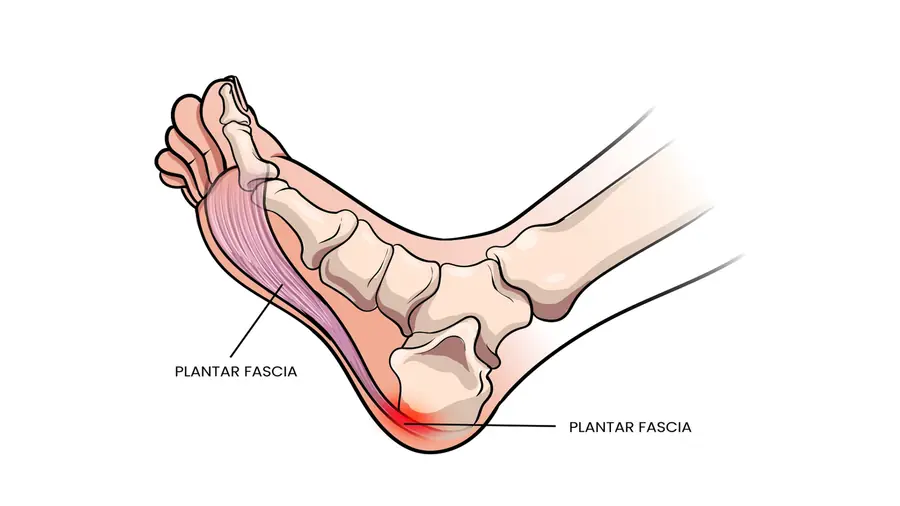
Plantar fasciitis is inflammation of the plantar fascia, the thick band of tissue that runs along the bottom of your foot from the heel to the toes. When that tissue gets overloaded or strained, small tears form and the area becomes inflamed. The result is heel pain that follows a very specific pattern.
The classic symptom is sharp stabbing pain with the first step in the morning, or after long periods of sitting. It eases as you move around, then returns after rest. The American Podiatric Medical Association has a detailed clinical breakdown of how the fascia gets damaged if you want to read more about the mechanism.
Some people are at higher risk than others. Adults between 40 and 60 are the most common age group. Runners and athletes get it a lot, which is why the practice also handles it as part of sports medicine care. People who stand for long periods such as teachers, nurses, and retail workers are very susceptible. Foot structure matters too. Flat feet, high arches, and tight calf muscles all increase risk. Recent weight gain and pregnancy can also trigger it.
If you fall into one of these groups and you are starting to feel that first step pain in the morning, it is worth taking it seriously now rather than later. Plantar fasciitis Marietta podiatrists see every week gets worse the longer it is ignored.
The first two weeks: 5 proven best at home steps

Before you book anything, there are five things worth trying at home for two weeks. Most mild cases of heel pain respond to consistent home care if you start early.
- Towel stretch. Sit on the floor with your legs straight out. Loop a towel around the ball of your foot and gently pull the towel toward you while keeping the knee straight. Hold for 30 seconds. Repeat three times per foot, twice a day.
- Calf stretch on the wall. Place your hands on the wall, step one foot back, keep the back leg straight with the heel pressed down, and lean forward. Hold for 30 seconds per side. Tight calves pull on the plantar fascia, so this one matters more than people realize.
- Frozen water bottle roll. Freeze a water bottle. Roll the bottom of your foot over it for 10 minutes, twice a day. It stretches the fascia and ices the inflammation at the same time.
- Footwear changes. Supportive shoes from the moment you get out of bed. No flip flops. No walking barefoot at home, even on hardwood floors. If your athletic shoes are worn out, replace them. Old shoes are a major hidden cause of heel pain.
- Anti inflammatory measures. Ice the heel for 15 to 20 minutes after activity. Over the counter pain relief medication can help short term if your doctor approves it for your medical history.
If you do all five consistently for two weeks and the pain is not better, that is your signal. It is time to come in.
When at home steps are not enough
The phrase that comes up in the practice every week: don’t push through it. Plantar fasciitis gets worse with time, not better. Pushing through often turns a four week recovery into a four month one.
You should book an appointment if pain lasts more than two weeks despite home treatment, if pain is interfering with daily activities like walking the dog or working a full shift, if pain is getting worse instead of better, or if there is visible swelling or redness in the heel.
Booking earlier means fewer treatment sessions and faster recovery. Schedule an evaluation here and Dr. Iwu can confirm the diagnosis and map out a plan.
Advanced plantar fasciitis treatment Cobb County patients can access
This is where the difference between Choice Podiatry Center and a general practice clinic becomes obvious. Two of the most effective non invasive treatments for chronic heel pain are available on site in Marietta.
EPAT therapy in Marietta stands for Extracorporeal Pulse Activation Technology. It is non invasive, with no incisions, no anesthesia, and no down time. The treatment uses pulsed acoustic waves to stimulate blood flow and healing in the plantar fascia. Most patients need three to six sessions, each taking about 10 to 15 minutes, and you walk out of the office and return to activity right after. The American Academy of Orthopaedic Surgeons lists shockwave therapy as one of the most evidence supported non surgical options for chronic plantar fasciitis.

Laser therapy for plantar fasciitis is the other in office option. It is also non invasive and works by reducing inflammation and accelerating tissue repair at the cellular level. Depending on your case, Dr. Iwu may use laser therapy on its own, or in combination with EPAT for a stronger result. Both treatments are covered under our EPAT and laser therapy services.

Custom orthotics are often the long term answer for preventing recurrence. If your foot structure is part of why the fascia got inflamed in the first place, treating the inflammation without correcting the underlying mechanics means it will likely come back. Dr. Iwu fits orthotics through a four step in office process: gait and structural assessment, foot impressions, orthotic design, and a fitting check inside your shoes. More on the process is on the custom orthotics page.
What recovery actually looks like
Most patients see meaningful relief within six to eight weeks of starting treatment. The combination approach, EPAT or laser therapy plus custom orthotics plus the home stretches above, gives the strongest results by a wide margin compared to any one of those used alone.
Worth being honest about: chronic plantar fasciitis can recur. Once the fascia has been inflamed badly enough to need professional treatment, prevention becomes part of the plan. That means sticking with supportive footwear, keeping up with calf stretches, replacing athletic shoes on schedule, and wearing your orthotics. The patients who do well long term are the ones who treat prevention as part of normal routine, not an afterthought.
Why patients choose Dr. Iwu as their heel pain podiatrist near me
Dr. Iwu is a board certified podiatrist running a fully equipped office. EPAT and laser therapy are available on site, which means no referrals to hospitals or outside specialists, and no long waits between diagnosis and treatment. Diagnostics and treatment happen under one roof.
Scheduling is flexible during the week, and most major insurance plans are accepted, including United, Medicare, Cigna, Blue Cross Blue Shield, Anthem, Aetna, and CareSource. The office is at 540 Powder Spring St, Suite B6, in Marietta, easy to reach from anywhere in Cobb County.
Don’t wait. Book your consultation today
If you have been dealing with morning heel pain for more than two weeks, or if it is starting to affect how you walk, work, or train, this is the point where waiting costs you. Plantar fasciitis Marietta patients who book early consistently recover faster than the ones who try to wait it out.
Book online through our appointment page or call to schedule. If you have questions before booking, reach out to the team here.
Contact and booking
Phone: (770) 702 8723
Address: 540 Powder Spring St, Suite B6, Marietta, GA 30064
Online booking: choicepodiatrycenter.com/appointment_request
More on plantar fasciitis care: choicepodiatrycenter.com/conditions/plantar-fasciitis